
Perth Translation Services » Turkish Automotive and Engineering Translation
Turkish Automotive and Engineering Translation
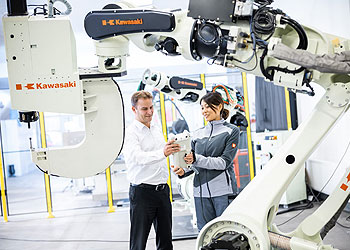 Perth Translation provides automotive and engineering translation services from Turkish or to Turkish, by Turkish translators experienced in translating for technical product manuals and brochures.
Turkish <> English Technical translators are comfortable and meticulous in finding out technical jargon and ensuring technical translations are read correctly by the product owners in each industry.
We manage large volume Turkish <> English technical translations, and keep translation memory files to ensure past technical translations are not wasted for our repeat customers, helping clients to save on costs.
Upload documents for translation
Professional Turkish Translator

Perth Translation provides professional Turkish <> English translation services. You can use the form on this page to upload multiple files for a confirm quote and delivery time. Our Turkish translator is ready to assist with your translation project.

Automotive Engineering Translations For All Major Languages
- Arabic Automotive Translation
- Chinese Automotive Translation
- Catalan Automotive Translation
- Croatian Automotive Translation
- Czech Automotive Translation
- Estonian Automotive Translation
- Dutch Automotive Translation
- Finnish Automotive Translation
- French Automotive Translation
- German Automotive Translation
- Greek Automotive Translation
- Hindi Automotive Translation
- Hungarian Automotive Translation
- Indonesian Automotive Translation
- Italian Automotive Translation
- Japanese Automotive Translation
- Korean Automotive Translation
- Macedonian Automotive Translation
- Malay Automotive Translation
- Norwegian Automotive Translation
- Persian Automotive Translation
- Polish Automotive Translation
- Portuguese Automotive Translation
- Punjabi Automotive Translation
- Romanian Automotive Translation
- Russian Automotive Translation
- Serbian Automotive Translation
- Slovak Automotive Translation
- Spanish Automotive Translation
- Swedish Automotive Translation
- Tagalog Automotive Translation
- Thai Automotive Translation
- Turkish Automotive Translation
- Ukrainian Automotive Translation
- Urdu Automotive Translation
- Vietnamese Automotive Translation
About the Turkish Language
Turkish is the most widely spoken of the Turkic languages, with around 10–15 million native speakers in Southeast Europe (mostly in East and Western Thrace) and 60–65 million native speakers in Western Asia (mostly in Anatolia).
Turkish as an official EU language, even though Turkey is not a member state.
The earliest known Old Turkic inscriptions are the three monumental Orkhon inscriptions found in modern Mongolia. Erected in honour of the prince Kul Tigin and his brother Emperor Bilge Khagan, these date back to the second Turk Kaghanate. After the discovery and excavation of these monuments and associated stone slabs by Russian archaeologists in the wider area surrounding the Orkhon Valley between 1889 and 1893, it became established that the language on the inscriptions was the Old Turkic language written using the Old Turkic alphabet, which has also been referred to as "Turkic runes" or "runiform" due to a superficial similarity to the Germanic runic alphabets.
With the Turkic expansion during Early Middle Ages (c. 6th–11th centuries), peoples speaking Turkic languages spread across Central Asia, covering a vast geographical region stretching from Siberia and to Europe and the Mediterranean. The Seljuqs of the Oghuz Turks, in particular, brought their language, Oghuz—the direct ancestor of today's Turkish language—into Anatolia during the 11th century. Also during the 11th century, an early linguist of the Turkic languages, Mahmud al-Kashgari from the Kara-Khanid Khanate, published the first comprehensive Turkic language dictionary and map of the geographical distribution of Turkic speakers in the Compendium of the Turkic Dialects (Ottoman Turkish: Divânü Lügati't-Türk).
Turkish Translation Expertise
Turkish is an agglutinative language where suffixes are chained onto root words to express grammatical relationships, meaning a single Turkish word can convey what requires an entire English clause. Vowel harmony governs suffix selection, and the language has no grammatical gender but uses six cases for nouns. Official Turkish documents use a formal register with Ottoman-era Arabic and Persian loanwords that have largely fallen out of everyday use, requiring translators to be versed in both modern and bureaucratic Turkish.
Turkish uses the Latin alphabet adopted in 1928 under Atatürk's language reforms, with 29 letters including ç, ğ (soft g, which lengthens the preceding vowel), ı (dotless i), ö, ş, and ü. The distinction between dotted İ/i and dotless I/ı is critical and frequently causes errors in digital processing and translation.
Common Turkish Documents
Commonly translated documents include doğum belgesi (birth certificates), nüfus kayıt örneği (family register extracts), evlilik cüzdanı (marriage booklets), criminal record certificates from the e-Devlet system, and academic diplomas from Turkish universities.
NAATI offers certification for Turkish translators, and there is a reasonable pool of certified practitioners in Australia. NAATI-certified Turkish translations are accepted by Australian immigration, educational, and legal authorities.
About the Turkish Language
Turkish underwent one of the most dramatic alphabet changes in history when Atatürk replaced the Arabic script with a modified Latin alphabet in 1928, giving the entire nation just three months to learn the new system. As an agglutinative language, Turkish can express in a single word what requires an entire English sentence — the word "Avustralyalılaştıramadıklarımızdanmışsınızcasına" (meaning "as if you are one of those whom we could not make into an Australian") is grammatically valid. Turkish also has complete vowel harmony, where all vowels in a word must belong to the same harmonic class.
Industry Translation Requirements
Australia imports the vast majority of its vehicles and automotive components, requiring translation of technical manuals, safety specifications, and compliance documentation from manufacturers in Japan, South Korea, Germany, and China. Engineering firms operating across international supply chains need translated technical drawings, specifications, and quality management documentation to meet Australian Design Rules (ADRs) and Standards Australia requirements.
Automotive and engineering translation demands precision with technical specifications, torque values, material grades, and safety-critical terminology where errors can have serious consequences. Translators must understand Australian Design Rules numbering, SAE and ISO standards referenced in Australian engineering, and local terminology differences from source markets.
Common documents include vehicle compliance plates and ADR certification, workshop manuals and technical service bulletins, engineering drawings and specifications, material safety data sheets (SDS), quality management system documentation (ISO 9001), and import approval applications for the Department of Infrastructure.
Translated technical documentation must meet Australian Design Rules administered by the Department of Infrastructure, Transport, Regional Development and Communications. Imported vehicles require compliance with ADRs, and translated compliance documentation must be accurate for the Registered Automotive Workshop Scheme (RAWS) approval process.
