
Perth Translation Services » Tagalog Automotive and Engineering Translation
Tagalog Automotive and Engineering Translation
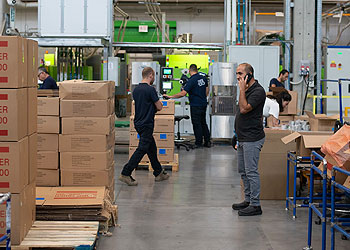 Perth Translation provides automotive and engineering translation services from Tagalog or to Tagalog, by Tagalog translators experienced in translating for technical product manuals and brochures.
Tagalog <> English Technical translators are comfortable and meticulous in finding out technical jargon and ensuring technical translations are read correctly by the product owners in each industry.
We manage large volume Tagalog <> English technical translations, and keep translation memory files to ensure past technical translations are not wasted for our repeat customers, helping clients to save on costs.
Upload documents for translation
Professional Tagalog Translator
Perth Translation provides professional Tagalog <> English translation services. You can use the form on this page to upload multiple files for a confirm quote and delivery time. Our Tagalog translator is ready to assist with your translation project.
Automotive Engineering Translations For All Major Languages
- Arabic Automotive Translation
- Chinese Automotive Translation
- Catalan Automotive Translation
- Croatian Automotive Translation
- Czech Automotive Translation
- Estonian Automotive Translation
- Dutch Automotive Translation
- Finnish Automotive Translation
- French Automotive Translation
- German Automotive Translation
- Greek Automotive Translation
- Hindi Automotive Translation
- Hungarian Automotive Translation
- Indonesian Automotive Translation
- Italian Automotive Translation
- Japanese Automotive Translation
- Korean Automotive Translation
- Macedonian Automotive Translation
- Malay Automotive Translation
- Norwegian Automotive Translation
- Persian Automotive Translation
- Polish Automotive Translation
- Portuguese Automotive Translation
- Punjabi Automotive Translation
- Romanian Automotive Translation
- Russian Automotive Translation
- Serbian Automotive Translation
- Slovak Automotive Translation
- Spanish Automotive Translation
- Swedish Automotive Translation
- Tagalog Automotive Translation
- Thai Automotive Translation
- Turkish Automotive Translation
- Ukrainian Automotive Translation
- Urdu Automotive Translation
- Vietnamese Automotive Translation
About the Tagalog Language
Tagalog is one of the main languages spoken in the Philippines. More than twenty-two million people speak it as their first language. It originally was spoken by the Tagalog people of the Philippines, who were mainly in Bulacan, Cavite, and some parts of the island of Luzon.
Tagalog is now spoken nationwide like English in the Philippines. It is a mix of Spanish, Malay, and English. It originally was used with an abugida, the Baybayin script, but now the Latin alphabet is used to write the words.
The word Tagalog is derived from the endonym taga-ilog ("river dweller"), composed of tagá- ("native of" or "from") and ilog ("river"). Linguists such as Dr. David Zorc and Dr. Robert Blust speculate that the Tagalogs and other Central Philippine ethno-linguistic groups originated in Northeastern Mindanao or the Eastern Visayas.
Possible words of Old Tagalog origin are attested in the Laguna Copperplate Inscription from the tenth century, which is largely written in Old Malay. The first known complete book to be written in Tagalog is the Doctrina Christiana (Christian Doctrine), printed in 1593. The Doctrina was written in Spanish and two transcriptions of Tagalog; one in the ancient, then-current Baybayin script and the other in an early Spanish attempt at a Latin orthography for the language.
Throughout the 333 years of Spanish rule, various grammars and dictionaries were written by Spanish clergymen. In 1610, the Dominican priest Francisco Blancas de San Jose published the “Arte y reglas de la Lengua Tagala” (which was subsequently revised with two editions in 1752 and 1832) in Bataan. In 1613, the Franciscan priest Pedro de San Buenaventura published the first Tagalog dictionary, his "Vocabulario de la Lengua Tagala" in Pila, Laguna.
The first substantial dictionary of the Tagalog language was written by the Czech Jesuit missionary Pablo Clain in the beginning of the 18th century. Clain spoke Tagalog and used it actively in several of his books. He prepared the dictionary, which he later passed over to Francisco Jansens and José Hernandez. Further compilation of his substantial work was prepared by P. Juan de Noceda and P. Pedro de Sanlucar and published as Vocabulario de la Lengua Tagala in Manila in 1754 and then repeatedly reedited, with the last edition being in 2013 in Manila.
Tagalog Translation Expertise
Tagalog uses a verb-initial sentence structure (VSO) that is fundamentally different from English word order, and its focus system marks the semantic role of the topic through verbal affixes rather than word position. The language has an extensive affix system where a single root word can generate dozens of derived forms with distinct meanings through prefixes, infixes, and suffixes. Code-switching between Tagalog and English (known as Taglish) is extremely common in the Philippines, and translators must determine whether English terms embedded in source documents should be retained or translated.
Modern Tagalog is written using the Latin alphabet with 28 letters, including the Spanish-derived ñ and ng (treated as a single letter). The historical Baybayin script is not used in modern documents but appears on Philippine banknotes and cultural materials.
Common Tagalog Documents
Commonly translated documents include PSA-issued birth certificates (Certificate of Live Birth), marriage certificates, NBI clearances (police checks), educational transcripts from Philippine universities, and CENOMAR certificates (Certificate of No Marriage) required for partner visa applications.
NAATI offers certification for Filipino (Tagalog) translators, and there is a strong pool of certified practitioners in Australia given the large Filipino community. NAATI-certified Tagalog translations are widely accepted by Australian government agencies.
About the Tagalog Language
Tagalog has one of the most complex verb systems in the world, with a "focus" system where verbal affixes indicate whether the subject, object, location, or instrument is the topic of the sentence — a feature extremely rare in other language families. The word "boondocks" entered English from the Tagalog word "bundok" meaning mountain, brought back by American soldiers after the Philippine-American War. Tagalog is also one of the few Austronesian languages to have had its own pre-colonial writing system, Baybayin, which is now featured on Philippine banknotes.
Industry Translation Requirements
Australia imports the vast majority of its vehicles and automotive components, requiring translation of technical manuals, safety specifications, and compliance documentation from manufacturers in Japan, South Korea, Germany, and China. Engineering firms operating across international supply chains need translated technical drawings, specifications, and quality management documentation to meet Australian Design Rules (ADRs) and Standards Australia requirements.
Automotive and engineering translation demands precision with technical specifications, torque values, material grades, and safety-critical terminology where errors can have serious consequences. Translators must understand Australian Design Rules numbering, SAE and ISO standards referenced in Australian engineering, and local terminology differences from source markets.
Common documents include vehicle compliance plates and ADR certification, workshop manuals and technical service bulletins, engineering drawings and specifications, material safety data sheets (SDS), quality management system documentation (ISO 9001), and import approval applications for the Department of Infrastructure.
Translated technical documentation must meet Australian Design Rules administered by the Department of Infrastructure, Transport, Regional Development and Communications. Imported vehicles require compliance with ADRs, and translated compliance documentation must be accurate for the Registered Automotive Workshop Scheme (RAWS) approval process.
