
Perth Translation Services » Thai Automotive and Engineering Translation
Thai Automotive and Engineering Translation
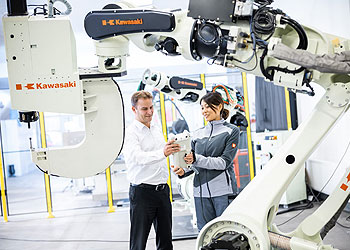 Perth Translation provides automotive and engineering translation services from Thai or to Thai, by Thai translators experienced in translating for technical product manuals and brochures.
Thai <> English Technical translators are comfortable and meticulous in finding out technical jargon and ensuring technical translations are read correctly by the product owners in each industry.
We manage large volume Thai <> English technical translations, and keep translation memory files to ensure past technical translations are not wasted for our repeat customers, helping clients to save on costs.
Upload documents for translation
Professional Thai Translator

Perth Translation provides professional Thai <> English translation services. You can use the form on this page to upload multiple files for a confirm quote and delivery time. Our Thai translator is ready to assist with your translation project.

Automotive Engineering Translations For All Major Languages
- Arabic Automotive Translation
- Chinese Automotive Translation
- Catalan Automotive Translation
- Croatian Automotive Translation
- Czech Automotive Translation
- Estonian Automotive Translation
- Dutch Automotive Translation
- Finnish Automotive Translation
- French Automotive Translation
- German Automotive Translation
- Greek Automotive Translation
- Hindi Automotive Translation
- Hungarian Automotive Translation
- Indonesian Automotive Translation
- Italian Automotive Translation
- Japanese Automotive Translation
- Korean Automotive Translation
- Macedonian Automotive Translation
- Malay Automotive Translation
- Norwegian Automotive Translation
- Persian Automotive Translation
- Polish Automotive Translation
- Portuguese Automotive Translation
- Punjabi Automotive Translation
- Romanian Automotive Translation
- Russian Automotive Translation
- Serbian Automotive Translation
- Slovak Automotive Translation
- Spanish Automotive Translation
- Swedish Automotive Translation
- Tagalog Automotive Translation
- Thai Automotive Translation
- Turkish Automotive Translation
- Ukrainian Automotive Translation
- Urdu Automotive Translation
- Vietnamese Automotive Translation
About the Thai Language
Thai is the national and official language of Thailand and the first language of the Thai people and the vast majority of Thai Chinese. It is a member of the Tai group of the Tai–Kadai language family.
Thai is natively spoken by, according to Ethnologue, over 20 million people (2000). In reality, the number of native Thai speakers is likely to be much higher, since the Thai citizens throughout central Thailand learn it as their first language while the populations of western and eastern parts of Thailand, which has since ancient times formed the core territory of Siam, also speak central Thai as their first language. Moreover, most Thais in the northern and the northeastern (Isaan) parts of the country today are bilingual speakers of Central Thai and their respective regional dialects due to the fact that (Central) Thai is the language of television, education, news reporting, and all forms of media. A recent research found that the speakers of the Northern Thai language (or Kham Mueang) have become so few, as most people in northern Thailand now invariably speak standard Thai, such that they are now using mostly central Thai words and seasoning their speech only with "kham mueang" accent.
Standard Thai is based on the Ayutthaya dialect, and the register in the educated classes. In addition to Central Thai, Thailand is home to other related Tai languages. Although some linguists classify these dialects as related but distinct languages, there is a high degree of mutual intelligibility between these regional dialects/languages. Nonetheless, it is often claimed that the language policy of the Thai government[citation needed] has shaped the dominant view that these languages are only regional variants or dialects of the "same" Thai language, or as "different kinds of Thai".
Thai Translation Expertise
Thai is a tonal language with five tones that affect meaning, and its written form lacks spaces between words, requiring translators to segment text based on linguistic knowledge rather than visual cues. The language has an elaborate system of pronouns and particles reflecting social hierarchy, and royal, religious, and common registers use entirely different vocabulary for the same concepts. Legal and official Thai documents employ a formal register with Pali and Sanskrit loanwords that differs significantly from everyday spoken Thai.
Thai uses its own abugida script with 44 consonant symbols and 15 vowel symbols that can appear above, below, before, or after the consonant they modify. The script is written left to right without spaces between words, and tone marks appear above consonants. Transliteration into English follows the Royal Thai General System, though personal names often use idiosyncratic romanisation.
Common Thai Documents
Commonly translated documents include สูติบัตร (birth certificates), ทะเบียนสมรส (marriage certificates), ทะเบียนบ้าน (house registration books), police clearance certificates from the Royal Thai Police, and academic transcripts from Thai universities.
NAATI offers certification for Thai translators, and certified practitioners are available in cities with significant Thai communities. NAATI-certified Thai translations are accepted by the Department of Home Affairs and other Australian authorities for immigration and official purposes.
About the Thai Language
Thai has no verb conjugation whatsoever — tense, mood, and aspect are all conveyed through separate particles and context rather than changes to the verb itself. The Thai alphabet has 44 consonant symbols but only 21 distinct consonant sounds, because many consonants have been retained from older pronunciations and are now used primarily to indicate the tone class of a syllable. Bangkok's ceremonial name in Thai is 168 characters long, making it the longest place name in the world — locals simply call it "Krung Thep."
Industry Translation Requirements
Australia imports the vast majority of its vehicles and automotive components, requiring translation of technical manuals, safety specifications, and compliance documentation from manufacturers in Japan, South Korea, Germany, and China. Engineering firms operating across international supply chains need translated technical drawings, specifications, and quality management documentation to meet Australian Design Rules (ADRs) and Standards Australia requirements.
Automotive and engineering translation demands precision with technical specifications, torque values, material grades, and safety-critical terminology where errors can have serious consequences. Translators must understand Australian Design Rules numbering, SAE and ISO standards referenced in Australian engineering, and local terminology differences from source markets.
Common documents include vehicle compliance plates and ADR certification, workshop manuals and technical service bulletins, engineering drawings and specifications, material safety data sheets (SDS), quality management system documentation (ISO 9001), and import approval applications for the Department of Infrastructure.
Translated technical documentation must meet Australian Design Rules administered by the Department of Infrastructure, Transport, Regional Development and Communications. Imported vehicles require compliance with ADRs, and translated compliance documentation must be accurate for the Registered Automotive Workshop Scheme (RAWS) approval process.
