
Perth Translation Services » Greek Automotive and Engineering Translation
Greek Automotive and Engineering Translation
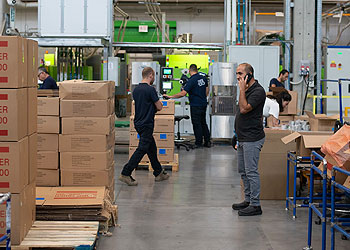 Perth Translation provides automotive and engineering translation services from Greek or to Greek, by Greek translators experienced in translating for technical product manuals and brochures.
Greek <> English Technical translators are comfortable and meticulous in finding out technical jargon and ensuring technical translations are read correctly by the product owners in each industry.
We manage large volume Greek <> English technical translations, and keep translation memory files to ensure past technical translations are not wasted for our repeat customers, helping clients to save on costs.
Upload documents for translation
Professional Greek Translator

Perth Translation provides professional Greek <> English translation services. You can use the form on this page to upload multiple files for a confirm quote and delivery time. Our Greek translator is ready to assist with your translation project.

Automotive Engineering Translations For All Major Languages
- Arabic Automotive Translation
- Chinese Automotive Translation
- Catalan Automotive Translation
- Croatian Automotive Translation
- Czech Automotive Translation
- Estonian Automotive Translation
- Dutch Automotive Translation
- Finnish Automotive Translation
- French Automotive Translation
- German Automotive Translation
- Greek Automotive Translation
- Hindi Automotive Translation
- Hungarian Automotive Translation
- Indonesian Automotive Translation
- Italian Automotive Translation
- Japanese Automotive Translation
- Korean Automotive Translation
- Macedonian Automotive Translation
- Malay Automotive Translation
- Norwegian Automotive Translation
- Persian Automotive Translation
- Polish Automotive Translation
- Portuguese Automotive Translation
- Punjabi Automotive Translation
- Romanian Automotive Translation
- Russian Automotive Translation
- Serbian Automotive Translation
- Slovak Automotive Translation
- Spanish Automotive Translation
- Swedish Automotive Translation
- Tagalog Automotive Translation
- Thai Automotive Translation
- Turkish Automotive Translation
- Ukrainian Automotive Translation
- Urdu Automotive Translation
- Vietnamese Automotive Translation
About the Greek Language
The Greek language is the official language of Greece (Hellas) and Cyprus. It was first spoken in Greece and was also once spoken along the coast of Asia Minor (now a part of Turkey) and in southern Italy. It was also widely used in Western Asia and Northern Africa at one time. In Greek, the language is called Ελληνικά (elliniká).
Greeks write their language using the Greek alphabet. The Latin alphabet (used to write English and many other languages) came from the Greek alphabet. Many other alphabets around the world also came from the Greek one, such as the Cyrillic alphabet.
Greek is an independent branch of the Indo-European language family. The ancient language most closely related to it may be ancient Macedonian, which many scholars suggest may have been a dialect of Greek itself, but it is so poorly attested that it is difficult to conclude anything about it. Independently of the Macedonian question, some scholars have grouped Greek into Graeco-Phrygian, as Greek and the extinct Phrygian share features that are not found in other Indo-European languages. Among living languages, some Indo-Europeanists suggest that Greek may be most closely related to Armenian (see Graeco-Armenian) or the Indo-Iranian languages (see Graeco-Aryan), but little definitive evidence has been found for grouping the living branches of the family. In addition, Albanian has also been considered somewhat related to Greek and Armenian by some linguists. If proven and recognised, the three languages would form a new Balkan sub-branch with other dead European languages.
Modern Greek inherits most of its vocabulary from Ancient Greek, which in turn is an Indo-European language, but also includes a number of borrowings from the languages of the populations that inhabited Greece before the arrival of Proto-Greeks, some documented in Mycenaean texts; they include a large number of Greek toponyms. The form and meaning of many words have evolved. Loanwords (words of foreign origin) have entered the language, mainly from Latin, Venetian, and Turkish. During the older periods of Greek, loanwords into Greek acquired Greek inflections, thus leaving only a foreign root word. Modern borrowings (from the 20th century on), especially from French and English, are typically not inflected; other modern borrowings are derived from South Slavic (Macedonian/Bulgarian) and Eastern Romance languages (Aromanian and Megleno-Romanian).
Greek Translation Expertise
Modern Greek retains a complex inflectional system with four cases (nominative, accusative, genitive, vocative), three genders, and extensive verb conjugation that marks tense, aspect, mood, voice, and person. A major translation challenge is the diglossia legacy — until 1976, official documents used Katharevousa (a formal archaising register), while modern documents use Dimotiki (the vernacular). Translators encountering older Greek documents need competence in both. Greek also uses a formal legal and ecclesiastical vocabulary heavily drawn from Ancient Greek roots that differs significantly from everyday Modern Greek.
Greek uses its own alphabet of 24 letters (alpha to omega), written left-to-right. The modern monotonic system (adopted in 1982) uses only the acute accent (τόνος) to mark stress, replacing the older polytonic system which used three accent types plus breathing marks. Translators must transliterate Greek names consistently — there is no single standard (Giorgos/Georgios, Papadopoulos/Papadopulos), and the spelling used on existing English-language identity documents should be matched.
Common Greek Documents
Greek documents commonly requiring translation include the ληξιαρχική πράξη γέννησης (lixiarkhiki praxi gennisis, birth certificate), πιστοποιητικό οικογενειακής κατάστασης (pistopoiitiko ikogeneiakis katastasis, family status certificate), ποινικό μητρώο (poiniko mitroo, criminal record), and πτυχίο (ptykhio, university degree). Older documents may be in Katharevousa (the formal archaising register used until 1976), requiring specialist knowledge to translate accurately.
NAATI offers certification for Greek translators and interpreters, with one of the larger pools of accredited practitioners in Australia. Greek has historically been among the top languages for NAATI accreditation, reflecting the size and longevity of the Greek-Australian community.
About the Greek Language
Greek has the longest documented history of any living language, with written records spanning over 3,400 years from Mycenaean Greek inscribed in Linear B script around 1450 BC. The Greek alphabet was the first to include vowels as separate letters (adapted from Phoenician around 800 BC), and it became the ancestor of both the Latin alphabet (used by English) and the Cyrillic alphabet (used by Russian). An estimated 30% of English vocabulary derives from Greek roots — words like "democracy," "philosophy," "telephone," "biology," and "catastrophe" are all Greek in origin.
Industry Translation Requirements
Australia imports the vast majority of its vehicles and automotive components, requiring translation of technical manuals, safety specifications, and compliance documentation from manufacturers in Japan, South Korea, Germany, and China. Engineering firms operating across international supply chains need translated technical drawings, specifications, and quality management documentation to meet Australian Design Rules (ADRs) and Standards Australia requirements.
Automotive and engineering translation demands precision with technical specifications, torque values, material grades, and safety-critical terminology where errors can have serious consequences. Translators must understand Australian Design Rules numbering, SAE and ISO standards referenced in Australian engineering, and local terminology differences from source markets.
Common documents include vehicle compliance plates and ADR certification, workshop manuals and technical service bulletins, engineering drawings and specifications, material safety data sheets (SDS), quality management system documentation (ISO 9001), and import approval applications for the Department of Infrastructure.
Translated technical documentation must meet Australian Design Rules administered by the Department of Infrastructure, Transport, Regional Development and Communications. Imported vehicles require compliance with ADRs, and translated compliance documentation must be accurate for the Registered Automotive Workshop Scheme (RAWS) approval process.
