
Perth Translation Services » German Automotive and Engineering Translation
German Automotive and Engineering Translation
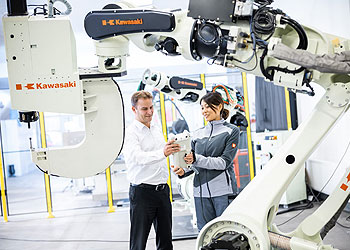 Perth Translation provides automotive and engineering translation services from German or to German, by German translators experienced in translating for technical product manuals and brochures.
German <> English Technical translators are comfortable and meticulous in finding out technical jargon and ensuring technical translations are read correctly by the product owners in each industry.
We manage large volume German <> English technical translations, and keep translation memory files to ensure past technical translations are not wasted for our repeat customers, helping clients to save on costs.
Upload documents for translation
Professional German Translator
Perth Translation provides professional German <> English translation services. You can use the form on this page to upload multiple files for a confirm quote and delivery time. Our German translator is ready to assist with your translation project.
Automotive Engineering Translations For All Major Languages
- Arabic Automotive Translation
- Chinese Automotive Translation
- Catalan Automotive Translation
- Croatian Automotive Translation
- Czech Automotive Translation
- Estonian Automotive Translation
- Dutch Automotive Translation
- Finnish Automotive Translation
- French Automotive Translation
- German Automotive Translation
- Greek Automotive Translation
- Hindi Automotive Translation
- Hungarian Automotive Translation
- Indonesian Automotive Translation
- Italian Automotive Translation
- Japanese Automotive Translation
- Korean Automotive Translation
- Macedonian Automotive Translation
- Malay Automotive Translation
- Norwegian Automotive Translation
- Persian Automotive Translation
- Polish Automotive Translation
- Portuguese Automotive Translation
- Punjabi Automotive Translation
- Romanian Automotive Translation
- Russian Automotive Translation
- Serbian Automotive Translation
- Slovak Automotive Translation
- Spanish Automotive Translation
- Swedish Automotive Translation
- Tagalog Automotive Translation
- Thai Automotive Translation
- Turkish Automotive Translation
- Ukrainian Automotive Translation
- Urdu Automotive Translation
- Vietnamese Automotive Translation
About the German Language
German is a West Germanic language that is most widely spoken in Germany, Austria, Switzerland, South Tyrol (Italy), the German-speaking Community of Belgium, and Liechtenstein. It is also one of the three official languages of Luxembourg.
The languages which are most similar to German are the other members of the West Germanic language branch: Afrikaans, German, English, the Frisian languages, Low German/Low Saxon, Luxembourgish, and Yiddish. German is the second most widely spoken Germanic language, after English.
German is an inflected language with four cases for nouns, pronouns and adjectives (nominative, accusative, genitive, dative), three genders (masculine, feminine, neuter), two numbers (singular, plural), and strong and weak verbs. German derives the majority of its vocabulary from the ancient Germanic branch of the Indo-European language family. A portion of German words are derived from Latin and Greek, and fewer are borrowed from French and Modern English. With slightly different standardized variants (German, Austrian and Swiss Standard German), German is a pluricentric language. It is also notable for its broad spectrum of dialects, with many unique varieties existing in Europe and also other parts of the world. Italy recognizes all the German minorities in its territory as national historic minorities and protects the varieties of German spoken in several regions of Northern Italy besides South Tyrol. Due to the limited intelligibility between certain varieties and Standard German, as well as the lack of an undisputed, scientific difference between a "dialect" and a "language", some German varieties or dialect groups (e.g. Low German or Plautdietsch) are alternatively referred to as "languages" or "dialects".
German Translation Expertise
German has four grammatical cases (nominative, accusative, dative, genitive), three genders, and a word order system that places the main verb at the end of subordinate clauses — producing complex nested sentence structures in legal and bureaucratic texts that require careful untangling for English readers. The language is famous for compound nouns of arbitrary length (Grundstücksverkehrsgenehmigungszuständigkeitsübertragungsverordnung is a real legal term), and translators must correctly identify the components. Austrian German (Österreichisches Deutsch) and Swiss German documents use distinct legal terminology and administrative vocabulary that differs from standard Hochdeutsch.
German uses the Latin alphabet with four additional characters: the umlauted vowels ä, ö, ü and the ligature ß (Eszett/scharfes S). The 2017 German orthography update officially introduced a capital ß (ẞ) for use in all-caps text. In Swiss German, ß is not used — it is replaced by "ss" in all contexts. Translators must handle these correctly, particularly in personal names where spelling variants (Mueller vs. Müller) have legal significance.
Common German Documents
German documents commonly requiring translation include the Geburtsurkunde (birth certificate), Heiratsurkunde (marriage certificate), Führungszeugnis (police clearance certificate), Zeugnis (school report/transcript), and Hochschulabschlusszeugnis (university degree certificate). Austrian equivalents use distinct terms — Strafregisterbescheinigung for police clearance — while Swiss documents may be issued in German, French, Italian, or Romansh depending on the canton.
NAATI offers certification for German translators and interpreters, with a healthy pool of accredited practitioners across Australia. German is well-represented in the NAATI system, and certified translations are readily obtainable in all major cities.
About the German Language
German is famous for compound nouns of theoretically unlimited length — the longest word ever used in official legislation was Rindfleischetikettierungsüberwachungsaufgabenübertragungsgesetz (63 letters, a beef labelling supervision delegation law), which was repealed in 2013 partly because of its unwieldiness. German is the most widely spoken native language in Europe, with over 100 million native speakers — more than French, Italian, or Spanish within Europe. All German nouns are capitalised, a feature shared by no other modern major language, and the language has three grammatical genders (masculine, feminine, neuter) assigned in ways that often defy logic — "girl" (Mädchen) is grammatically neuter, not feminine.
Industry Translation Requirements
Australia imports the vast majority of its vehicles and automotive components, requiring translation of technical manuals, safety specifications, and compliance documentation from manufacturers in Japan, South Korea, Germany, and China. Engineering firms operating across international supply chains need translated technical drawings, specifications, and quality management documentation to meet Australian Design Rules (ADRs) and Standards Australia requirements.
Automotive and engineering translation demands precision with technical specifications, torque values, material grades, and safety-critical terminology where errors can have serious consequences. Translators must understand Australian Design Rules numbering, SAE and ISO standards referenced in Australian engineering, and local terminology differences from source markets.
Common documents include vehicle compliance plates and ADR certification, workshop manuals and technical service bulletins, engineering drawings and specifications, material safety data sheets (SDS), quality management system documentation (ISO 9001), and import approval applications for the Department of Infrastructure.
Translated technical documentation must meet Australian Design Rules administered by the Department of Infrastructure, Transport, Regional Development and Communications. Imported vehicles require compliance with ADRs, and translated compliance documentation must be accurate for the Registered Automotive Workshop Scheme (RAWS) approval process.
