
Perth Translation Services » Finnish Automotive and Engineering Translation
Finnish Automotive and Engineering Translation
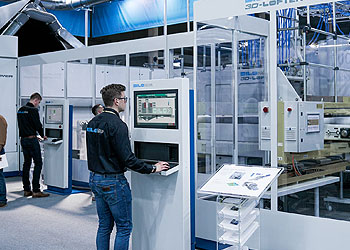 Perth Translation provides automotive and engineering translation services from Finnish or to Finnish, by Finnish translators experienced in translating for technical product manuals and brochures.
Finnish <> English Technical translators are comfortable and meticulous in finding out technical jargon and ensuring technical translations are read correctly by the product owners in each industry.
We manage large volume Finnish <> English technical translations, and keep translation memory files to ensure past technical translations are not wasted for our repeat customers, helping clients to save on costs.
Upload documents for translation
Professional Finnish Translator

Perth Translation provides professional Finnish <> English translation services. You can use the form on this page to upload multiple files for a confirm quote and delivery time. Our Finnish translator is ready to assist with your translation project.

Automotive Engineering Translations For All Major Languages
- Arabic Automotive Translation
- Chinese Automotive Translation
- Catalan Automotive Translation
- Croatian Automotive Translation
- Czech Automotive Translation
- Estonian Automotive Translation
- Dutch Automotive Translation
- Finnish Automotive Translation
- French Automotive Translation
- German Automotive Translation
- Greek Automotive Translation
- Hindi Automotive Translation
- Hungarian Automotive Translation
- Indonesian Automotive Translation
- Italian Automotive Translation
- Japanese Automotive Translation
- Korean Automotive Translation
- Macedonian Automotive Translation
- Malay Automotive Translation
- Norwegian Automotive Translation
- Persian Automotive Translation
- Polish Automotive Translation
- Portuguese Automotive Translation
- Punjabi Automotive Translation
- Romanian Automotive Translation
- Russian Automotive Translation
- Serbian Automotive Translation
- Slovak Automotive Translation
- Spanish Automotive Translation
- Swedish Automotive Translation
- Tagalog Automotive Translation
- Thai Automotive Translation
- Turkish Automotive Translation
- Ukrainian Automotive Translation
- Urdu Automotive Translation
- Vietnamese Automotive Translation
About the Finnish Language
The Finnish language is a Finno-Ugric language, a group of languages belonging to the Uralic language family. It is one of the two official languages of Finland. It is also an official minority language in Sweden.
Finnish is one of the four national languages of Europe that is not an Indo-European language. The other three are Estonian and Hungarian, which are also Uralic languages, and Basque.
In the 19th century Johan Vilhelm Snellman and others began to stress the need to improve the status of Finnish. Ever since the days of Mikael Agricola, written Finnish had been used almost exclusively in religious contexts, but now Snellman's Hegelian nationalistic ideas of Finnish as a fully-fledged national language gained considerable support. Concerted efforts were made to improve the status of the language and to modernize it, and by the end of the century Finnish had become a language of administration, journalism, literature, and science in Finland, along with Swedish.
The most important contributions to improving the status of Finnish were made by Elias Lönnrot. His impact on the development of modern vocabulary in Finnish was particularly important. In addition to compiling the Kalevala, he acted as an arbiter in disputes about the development of standard Finnish between the proponents of western and eastern dialects, ensuring that the western dialects Agricola had preferred preserved their preeminent role, while many originally dialect words from Eastern Finland were introduced to the standard language, enriching it considerably. The first novel written in Finnish (and by a Finnish speaker) was Seven Brothers (Seitsemän veljestä), published by Aleksis Kivi in 1870.
Finnish Translation Expertise
Finnish has 15 grammatical cases and is highly agglutinative — a single Finnish word can express what requires an entire English phrase (e.g. "talossanikinko" = "in my house too?"). The language has complex consonant gradation rules where consonants weaken or strengthen depending on the syllable structure, affecting both meaning and form. Finnish has no articles, no grammatical gender, and no prepositions (using postpositions instead), meaning translators must add significant grammatical scaffolding when translating into English. Legal Finnish is particularly dense, with long compound sentences that follow a formal bureaucratic tradition.
Finnish uses the Latin alphabet with the additional letters ä and ö, which are considered separate letters positioned at the end of the alphabet (after z). Finnish orthography is highly phonemic — each letter corresponds consistently to one sound, making pronunciation predictable from spelling. Double vowels and double consonants are common and meaningful (tuli = fire, tuuli = wind, tulli = customs).
Common Finnish Documents
Finnish documents commonly requiring translation include the väestörekisteriote (population register extract), ajokortti (driving licence), tutkintotodistus (degree certificate), and rikosrekisteriote (criminal record extract). Documents are obtained through the Digital and Population Data Services Agency (DVV) and may be issued in Finnish, Swedish, or bilingual format reflecting Finland's two official languages.
NAATI does not currently offer specific Finnish certification due to low demand. Finnish speakers in Australia typically have strong English proficiency. Translations are handled by qualified translators providing a statutory declaration.
About the Finnish Language
Finnish has 15 grammatical cases and is so agglutinative that a single word can express what takes an entire English sentence — talossanikinko means "in my house too?" in just one word. Finnish is a Finno-Ugric language completely unrelated to the neighbouring Scandinavian languages (Swedish, Norwegian, Danish), despite Finland's geographic and cultural proximity to Scandinavia. The Finnish language has no future tense — speakers express future events using the present tense with context clues, which reflects a cultural pragmatism that some linguists connect to the Finnish concept of sisu (stoic determination and grit).
Industry Translation Requirements
Australia imports the vast majority of its vehicles and automotive components, requiring translation of technical manuals, safety specifications, and compliance documentation from manufacturers in Japan, South Korea, Germany, and China. Engineering firms operating across international supply chains need translated technical drawings, specifications, and quality management documentation to meet Australian Design Rules (ADRs) and Standards Australia requirements.
Automotive and engineering translation demands precision with technical specifications, torque values, material grades, and safety-critical terminology where errors can have serious consequences. Translators must understand Australian Design Rules numbering, SAE and ISO standards referenced in Australian engineering, and local terminology differences from source markets.
Common documents include vehicle compliance plates and ADR certification, workshop manuals and technical service bulletins, engineering drawings and specifications, material safety data sheets (SDS), quality management system documentation (ISO 9001), and import approval applications for the Department of Infrastructure.
Translated technical documentation must meet Australian Design Rules administered by the Department of Infrastructure, Transport, Regional Development and Communications. Imported vehicles require compliance with ADRs, and translated compliance documentation must be accurate for the Registered Automotive Workshop Scheme (RAWS) approval process.
