
Perth Translation Services » Dutch Automotive and Engineering Translation
Dutch Automotive and Engineering Translation
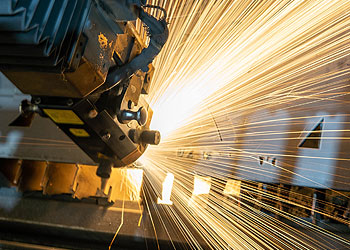 Perth Translation provides automotive and engineering translation services from Dutch or to Dutch, by Dutch translators experienced in translating for technical product manuals and brochures.
Dutch <> English Technical translators are comfortable and meticulous in finding out technical jargon and ensuring technical translations are read correctly by the product owners in each industry.
We manage large volume Dutch <> English technical translations, and keep translation memory files to ensure past technical translations are not wasted for our repeat customers, helping clients to save on costs.
Upload documents for translation
Professional Dutch Translator

Perth Translation provides professional Dutch <> English translation services. You can use the form on this page to upload multiple files for a confirm quote and delivery time. Our Dutch translator is ready to assist with your translation project.

Automotive Engineering Translations For All Major Languages
- Arabic Automotive Translation
- Chinese Automotive Translation
- Catalan Automotive Translation
- Croatian Automotive Translation
- Czech Automotive Translation
- Estonian Automotive Translation
- Dutch Automotive Translation
- Finnish Automotive Translation
- French Automotive Translation
- German Automotive Translation
- Greek Automotive Translation
- Hindi Automotive Translation
- Hungarian Automotive Translation
- Indonesian Automotive Translation
- Italian Automotive Translation
- Japanese Automotive Translation
- Korean Automotive Translation
- Macedonian Automotive Translation
- Malay Automotive Translation
- Norwegian Automotive Translation
- Persian Automotive Translation
- Polish Automotive Translation
- Portuguese Automotive Translation
- Punjabi Automotive Translation
- Romanian Automotive Translation
- Russian Automotive Translation
- Serbian Automotive Translation
- Slovak Automotive Translation
- Spanish Automotive Translation
- Swedish Automotive Translation
- Tagalog Automotive Translation
- Thai Automotive Translation
- Turkish Automotive Translation
- Ukrainian Automotive Translation
- Urdu Automotive Translation
- Vietnamese Automotive Translation
About the Dutch Language
The Dutch language is a West Germanic language that is spoken by around 24 million people as a first language—including the population of the Netherlands and about sixty percent of Belgium—and by another 5 million as a second language.
Among the Indo-European languages, Dutch is grouped within the Germanic languages, meaning it shares a common ancestor with languages such as English, German, and the Scandinavian languages. All Germanic languages are subject to the Grimm's law and Verner's law sound shifts, which originated in the Proto-Germanic language and define the basic features differentiating them from other Indo-European languages. This is assumed to have taken place in approximately the mid-first millennium BCE in the pre-Roman Northern European Iron Age.
The Germanic languages are traditionally divided into three groups: East (now extinct), West, and North Germanic. They remained mutually intelligible throughout the Migration Period. Dutch is part of the West Germanic group, which also includes English, Scots, Frisian, Low German (Old Saxon) and High German. It is characterized by a number of phonological and morphological innovations not found in North or East Germanic. The West Germanic varieties of the time are generally split into three dialect groups: Ingvaeonic (North Sea Germanic), Istvaeonic (Weser-Rhine Germanic) and Irminonic (Elbe Germanic). It appears that the Frankish tribes fit primarily into the Istvaeonic dialect group with certain Ingvaeonic influences towards the northwest, which are still seen in modern Dutch.
Dutch Translation Expertise
Dutch uses a V2 (verb-second) word order in main clauses but shifts to verb-final in subordinate clauses, creating sentence structures that require significant rearrangement in English translation. The language has a productive compound noun system where words are joined without spaces — Arbeidsongeschiktheidsverzekering (disability insurance) is a single word — and splitting these incorrectly changes meaning. Translators must also distinguish between documents from the Netherlands and Belgium (Flemish), as legal terminology, administrative structures, and even spelling conventions differ between the two.
Dutch uses the Latin alphabet with the digraph IJ (ij) often treated as a single letter — it is capitalised as IJ (both letters) at the start of words and proper names (e.g. IJsselmeer). Diacritics include the trema (ë, ü) used to indicate separate vowel pronunciation in adjacent vowels, and the acute accent (é) to mark stress. Dutch spelling was reformed in 1995 and 2005, so older documents may use different conventions.
Common Dutch Documents
Dutch documents commonly requiring translation include the uittreksel geboorteakte (birth certificate extract), huwelijksakte (marriage certificate), verklaring omtrent het gedrag (certificate of good conduct), and getuigschrift (educational diploma). Belgian Dutch documents use similar terminology but follow the Belgian civil system through local gemeenten (communes). The Netherlands also issues international multilingual extracts under the CIEC convention.
NAATI offers certification for Dutch translators, though practitioners are relatively few given that most Dutch and Flemish migrants to Australia have strong English proficiency. Demand is typically for older documents or for the precise certified translations required by Australian government authorities.
About the Dutch Language
Dutch is the parent language of Afrikaans, making it one of the few European languages to have given birth to an entirely separate language on another continent. The Hague Apostille Convention — the international treaty that certifies documents for use in foreign countries — is literally named after the Dutch city of The Hague where it was signed in 1961, making the Netherlands the birthplace of modern international document authentication. Dutch compound words can reach extraordinary lengths: meervoudigepersoonlijkheidsstoornis (multiple personality disorder) is a single 38-letter word, and the language routinely creates new compounds by simply joining existing words without spaces.
Industry Translation Requirements
Australia imports the vast majority of its vehicles and automotive components, requiring translation of technical manuals, safety specifications, and compliance documentation from manufacturers in Japan, South Korea, Germany, and China. Engineering firms operating across international supply chains need translated technical drawings, specifications, and quality management documentation to meet Australian Design Rules (ADRs) and Standards Australia requirements.
Automotive and engineering translation demands precision with technical specifications, torque values, material grades, and safety-critical terminology where errors can have serious consequences. Translators must understand Australian Design Rules numbering, SAE and ISO standards referenced in Australian engineering, and local terminology differences from source markets.
Common documents include vehicle compliance plates and ADR certification, workshop manuals and technical service bulletins, engineering drawings and specifications, material safety data sheets (SDS), quality management system documentation (ISO 9001), and import approval applications for the Department of Infrastructure.
Translated technical documentation must meet Australian Design Rules administered by the Department of Infrastructure, Transport, Regional Development and Communications. Imported vehicles require compliance with ADRs, and translated compliance documentation must be accurate for the Registered Automotive Workshop Scheme (RAWS) approval process.
