
Perth Translation Services » Polish Automotive and Engineering Translation
Polish Automotive and Engineering Translation
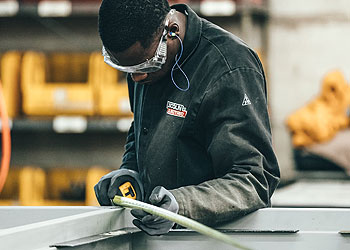 Perth Translation provides automotive and engineering translation services from Polish or to Polish, by Polish translators experienced in translating for technical product manuals and brochures.
Polish <> English Technical translators are comfortable and meticulous in finding out technical jargon and ensuring technical translations are read correctly by the product owners in each industry.
We manage large volume Polish <> English technical translations, and keep translation memory files to ensure past technical translations are not wasted for our repeat customers, helping clients to save on costs.
Upload documents for translation
Professional Polish Translator
Perth Translation provides professional Polish <> English translation services. You can use the form on this page to upload multiple files for a confirm quote and delivery time. Our Polish translator is ready to assist with your translation project.

Automotive Engineering Translations For All Major Languages
- Arabic Automotive Translation
- Chinese Automotive Translation
- Catalan Automotive Translation
- Croatian Automotive Translation
- Czech Automotive Translation
- Estonian Automotive Translation
- Dutch Automotive Translation
- Finnish Automotive Translation
- French Automotive Translation
- German Automotive Translation
- Greek Automotive Translation
- Hindi Automotive Translation
- Hungarian Automotive Translation
- Indonesian Automotive Translation
- Italian Automotive Translation
- Japanese Automotive Translation
- Korean Automotive Translation
- Macedonian Automotive Translation
- Malay Automotive Translation
- Norwegian Automotive Translation
- Persian Automotive Translation
- Polish Automotive Translation
- Portuguese Automotive Translation
- Punjabi Automotive Translation
- Romanian Automotive Translation
- Russian Automotive Translation
- Serbian Automotive Translation
- Slovak Automotive Translation
- Spanish Automotive Translation
- Swedish Automotive Translation
- Tagalog Automotive Translation
- Thai Automotive Translation
- Turkish Automotive Translation
- Ukrainian Automotive Translation
- Urdu Automotive Translation
- Vietnamese Automotive Translation
About the Polish Language
Polish is the official language of Poland and is the most widely spoken Western Slavic language and the second largest Slavic language after Russian.
Today, Polish is spoken by over 38.5 million people as their first language in Poland. Millions of Polish speakers can be found in countries such as Australia, Brazil, Canada, United Kingdom, United States, Scotland and so on. There are over 50 million Polish language speakers around the world.
The Polish language became far more homogeneous in the second half of the 20th century, in part due to the mass migration of several million Polish citizens from the eastern to the western part of the country after the Soviet annexation of the Kresy (Eastern Borderlands) in 1939, and the annexation of former German territory after World War II. This tendency toward a homogeneity also stems from the vertically integrated nature of the Polish People's Republic.
The inhabitants of different regions of Poland still speak Polish somewhat differently, although the differences between modern-day vernacular varieties and standardized Polish appear relatively slight. First-language speakers of Polish have no trouble understanding each other, and non-native speakers may have difficulty distinguishing regional variations.
Polish is normally described as consisting of four or five main dialects:
- Greater Polish, spoken in the west
- Lesser Polish, spoken in the south and southeast
- Masovian, spoken throughout the central and eastern parts of the country
- Silesian, spoken in the southwest
Kashubian, spoken in Pomerania west of Gdańsk on the Baltic Sea, is often considered a fifth dialect. It contains a number of features not found elsewhere in Poland, e.g. nine distinct oral vowels (vs. the five of standard Polish) and (in the northern dialects) phonemic word stress, an archaic feature preserved from Common Slavic times and not found anywhere else among the West Slavic languages. However, it "lacks most of the linguistic and social determinants of language-hood".
Polish Translation Expertise
Polish has seven grammatical cases, three genders (with masculine further subdivided into personal, animate, and inanimate), and a complex system of consonant clusters that can make names particularly difficult to transliterate consistently. Verb aspect — the distinction between completed and ongoing action — pervades every verb form and must be interpreted correctly for legal precision. Polish legal and bureaucratic language is notably dense, with long sentences and formal constructions inherited from the partitioning powers' administrative traditions.
Polish uses the Latin alphabet with nine additional characters formed by diacritics: a, c, e, l, n, o, s, z, and z. The distinction between similar letters (such as z, z, and rz, all representing different sounds) is essential for correct meaning and name spelling. Polish orthography is consistent but complex, with digraphs like sz, cz, and rz.
Common Polish Documents
Polish documents commonly requiring translation include the akt urodzenia (birth certificate), akt małżeństwa (marriage certificate), świadectwo ukończenia szkoły (school completion certificate), and zaświadczenie o niekaralności (criminal record certificate).
NAATI certification for Polish is well established, with certified translators available in most major Australian cities. Polish has historically been one of the stronger NAATI language pairs due to the large and long-established Polish-Australian community.
About the Polish Language
Polish has more consonant clusters than almost any other European language — the word bezwzględny ("ruthless") contains a run of four consecutive consonants, and tongue-twisters like chrząszcz brzmi w trzcinie ("the beetle buzzes in the reeds") are legendary among language learners. The language distinguishes between two separate "ch" sounds, two "sh" sounds, and two "zh" sounds that sound virtually identical to non-native ears but carry different meanings. Poland's constitution of 1791 was the first modern constitution in Europe and only the second in the world after the United States — and its original text remains readable to modern Polish speakers with only minor difficulty.
Industry Translation Requirements
Australia imports the vast majority of its vehicles and automotive components, requiring translation of technical manuals, safety specifications, and compliance documentation from manufacturers in Japan, South Korea, Germany, and China. Engineering firms operating across international supply chains need translated technical drawings, specifications, and quality management documentation to meet Australian Design Rules (ADRs) and Standards Australia requirements.
Automotive and engineering translation demands precision with technical specifications, torque values, material grades, and safety-critical terminology where errors can have serious consequences. Translators must understand Australian Design Rules numbering, SAE and ISO standards referenced in Australian engineering, and local terminology differences from source markets.
Common documents include vehicle compliance plates and ADR certification, workshop manuals and technical service bulletins, engineering drawings and specifications, material safety data sheets (SDS), quality management system documentation (ISO 9001), and import approval applications for the Department of Infrastructure.
Translated technical documentation must meet Australian Design Rules administered by the Department of Infrastructure, Transport, Regional Development and Communications. Imported vehicles require compliance with ADRs, and translated compliance documentation must be accurate for the Registered Automotive Workshop Scheme (RAWS) approval process.
