
Perth Translation Services » Slovak Automotive and Engineering Translation
Slovak Automotive and Engineering Translation
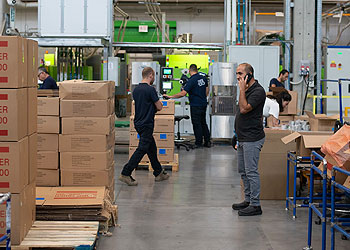 Perth Translation provides automotive and engineering translation services from Slovak or to Slovak, by Slovak translators experienced in translating for technical product manuals and brochures.
Slovak <> English Technical translators are comfortable and meticulous in finding out technical jargon and ensuring technical translations are read correctly by the product owners in each industry.
We manage large volume Slovak <> English technical translations, and keep translation memory files to ensure past technical translations are not wasted for our repeat customers, helping clients to save on costs.
Upload documents for translation
Professional Slovak Translator

Perth Translation provides professional Slovak <> English translation services. You can use the form on this page to upload multiple files for a confirm quote and delivery time. Our Slovak translator is ready to assist with your translation project.

Automotive Engineering Translations For All Major Languages
- Arabic Automotive Translation
- Chinese Automotive Translation
- Catalan Automotive Translation
- Croatian Automotive Translation
- Czech Automotive Translation
- Estonian Automotive Translation
- Dutch Automotive Translation
- Finnish Automotive Translation
- French Automotive Translation
- German Automotive Translation
- Greek Automotive Translation
- Hindi Automotive Translation
- Hungarian Automotive Translation
- Indonesian Automotive Translation
- Italian Automotive Translation
- Japanese Automotive Translation
- Korean Automotive Translation
- Macedonian Automotive Translation
- Malay Automotive Translation
- Norwegian Automotive Translation
- Persian Automotive Translation
- Polish Automotive Translation
- Portuguese Automotive Translation
- Punjabi Automotive Translation
- Romanian Automotive Translation
- Russian Automotive Translation
- Serbian Automotive Translation
- Slovak Automotive Translation
- Spanish Automotive Translation
- Swedish Automotive Translation
- Tagalog Automotive Translation
- Thai Automotive Translation
- Turkish Automotive Translation
- Ukrainian Automotive Translation
- Urdu Automotive Translation
- Vietnamese Automotive Translation
About the Slovak Language
Slovak is an Indo-European language that belongs to the West Slavic languages. Slovak is the official language of Slovakia, where it is spoken by approximately 5.51 million people (2014).
Slovak should not be confused with Slovene, or Slovenian, the main language of Slovenia.
The main features of Slovak syntax are as follows: The verb (predicate) agrees in person and number with its subject. Adjectives, pronouns and numerals agree in person, gender and case with the noun to which they refer. Adjectives precede their noun. Botanic or zoological terms are exceptions (e.g. mačka divá, literally "cat wild", Felis silvestris) as is the naming of Holy Spirit (Duch Svätý) in a majority of churches. Word order in Slovak is relatively free, since strong inflection enables the identification of grammatical roles (subject, object, predicate, etc.) regardless of word placement. This relatively free word order allows the use of word order to convey topic and emphasis.
The numerals 0–10 have unique forms, with numerals 1–4 requiring specific gendered representations. Numerals 11–19 are formed by adding násť to the end of each numeral. The suffix dsať is used to create numerals 20, 30 and 40; for numerals 50, 60, 70, 80 and 90, desiat is used. Compound numerals (21, 1054) are combinations of these words formed in the same order as their mathematical symbol is written (e.g. 21 = dvadsaťjeden, literally "twenty-one").
Slovak Translation Expertise
Slovak is a highly inflected West Slavic language with six grammatical cases, three genders, and a complex system of noun declensions and verb conjugations that must be parsed carefully during translation. Word order is relatively flexible but carries pragmatic meaning, so translators must understand the emphasis intended in the source text. The rhythmic rule (rytmický zákon), which prevents two long syllables in succession, affects spelling and must be observed in any translated text produced in Slovak.
Slovak uses the Latin alphabet with diacritical marks including háčky (carons) such as č, š, ž, and dĺžne (acute accents) such as á, é, í, which distinguish meaning and pronunciation. The characters ď, ť, ľ, ň, and the unique ô (circumflex o) require proper font support in translated documents.
Common Slovak Documents
Commonly translated documents include the rodný list (birth certificate), sobášny list (marriage certificate), criminal record extracts from the Slovak courts, and academic diplomas issued by Slovak universities.
NAATI certification for Slovak is available but the number of certified translators is limited given the smaller community size. Where a NAATI-certified translator is unavailable, Australian authorities may accept translations from recognised translation services with appropriate qualifications.
About the Slovak Language
Slovak is often considered the most intelligible Slavic language to speakers of other Slavic languages, sometimes called the "Esperanto of the Slavic world." The Slovak alphabet has 46 letters, making it one of the longest Latin-based alphabets in the world. The unique rhythmic rule (rytmický zákon) prohibits two long syllables in a row, a phonological constraint found in no other European language.
Industry Translation Requirements
Australia imports the vast majority of its vehicles and automotive components, requiring translation of technical manuals, safety specifications, and compliance documentation from manufacturers in Japan, South Korea, Germany, and China. Engineering firms operating across international supply chains need translated technical drawings, specifications, and quality management documentation to meet Australian Design Rules (ADRs) and Standards Australia requirements.
Automotive and engineering translation demands precision with technical specifications, torque values, material grades, and safety-critical terminology where errors can have serious consequences. Translators must understand Australian Design Rules numbering, SAE and ISO standards referenced in Australian engineering, and local terminology differences from source markets.
Common documents include vehicle compliance plates and ADR certification, workshop manuals and technical service bulletins, engineering drawings and specifications, material safety data sheets (SDS), quality management system documentation (ISO 9001), and import approval applications for the Department of Infrastructure.
Translated technical documentation must meet Australian Design Rules administered by the Department of Infrastructure, Transport, Regional Development and Communications. Imported vehicles require compliance with ADRs, and translated compliance documentation must be accurate for the Registered Automotive Workshop Scheme (RAWS) approval process.
