
Perth Translation Services » Korean Automotive and Engineering Translation
Korean Automotive and Engineering Translation
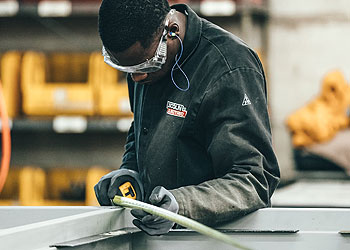 Perth Translation provides automotive and engineering translation services from Korean or to Korean, by Korean translators experienced in translating for technical product manuals and brochures.
Korean <> English Technical translators are comfortable and meticulous in finding out technical jargon and ensuring technical translations are read correctly by the product owners in each industry.
We manage large volume Korean <> English technical translations, and keep translation memory files to ensure past technical translations are not wasted for our repeat customers, helping clients to save on costs.
Upload documents for translation
Professional Korean Translator
Perth Translation provides professional Korean <> English translation services. You can use the form on this page to upload multiple files for a confirm quote and delivery time. Our Korean translator is ready to assist with your translation project.
Automotive Engineering Translations For All Major Languages
- Arabic Automotive Translation
- Chinese Automotive Translation
- Catalan Automotive Translation
- Croatian Automotive Translation
- Czech Automotive Translation
- Estonian Automotive Translation
- Dutch Automotive Translation
- Finnish Automotive Translation
- French Automotive Translation
- German Automotive Translation
- Greek Automotive Translation
- Hindi Automotive Translation
- Hungarian Automotive Translation
- Indonesian Automotive Translation
- Italian Automotive Translation
- Japanese Automotive Translation
- Korean Automotive Translation
- Macedonian Automotive Translation
- Malay Automotive Translation
- Norwegian Automotive Translation
- Persian Automotive Translation
- Polish Automotive Translation
- Portuguese Automotive Translation
- Punjabi Automotive Translation
- Romanian Automotive Translation
- Russian Automotive Translation
- Serbian Automotive Translation
- Slovak Automotive Translation
- Spanish Automotive Translation
- Swedish Automotive Translation
- Tagalog Automotive Translation
- Thai Automotive Translation
- Turkish Automotive Translation
- Ukrainian Automotive Translation
- Urdu Automotive Translation
- Vietnamese Automotive Translation
About the Korean Language
The Korean language (Korean), is spoken mainly in North and South Korea. It is spoken by more than 78 million people (most of whom are North or South Koreans).
In South Korea, the Korean language is called hangukmal (한국말) or hangugeo (Hangeul: 한국어, Hanja: 韓國語). In North Korea, however, it is called choseonmal (조선말) or choseoneo (조선어, 朝鮮語).
Modern Korean descends from Middle Korean, which in turn descends from Old Korean, which descends from the Proto-Koreanic language which is generally suggested to have its linguistic homeland somewhere in Manchuria. Whitman (2012) suggests that the proto-Koreans, already present in northern Korea, expanded into the southern part of the Korean Peninsula at around 300 BCe and coexist with the descendants of the Japonic Mumun cultivators (or assimilated them). Both had influence on each other and a later founder effect diminished the internal variety of both language families.
Chinese characters arrived in Korea (see Sino-Xenic pronunciations for further information) together with Buddhism during the Proto-Three Kingdoms era in the 1st century BC. It was adapted for Korean and became known as Hanja, and remained as the main script for writing Korean through over a millennium alongside various phonetic scripts that were later invented such as Idu, Gugyeol and Hyangchal. Mainly privileged elites were educated to read and write in Hanja. However, most of the population was illiterate. In the 15th century, King Sejong the Great personally developed an alphabetic featural writing system known today as Hangul. He felt that Hanja was inadequate to write Korean and that this was the cause of its very restricted use; Hangul was designed to either aid in reading Hanja or replace Hanja entirely. Introduced in the document "Hunminjeongeum", it was called "eonmun" (colloquial script) and quickly spread nationwide to increase literacy in Korea. Hangul was widely used by all the Korean classes but often treated as "amkeul" (script for female) and disregarded by privileged elites, whereas Hanja was regarded as "jinseo" (true text). Consequently, official documents were always written in Hanja during the Joseon era. Since most people couldn't understand Hanja, Korean kings sometimes released public notices entirely written in Hangul as early as the 16th century for all Korean classes, including uneducated peasants and slaves. By the 17th century, Korean elites Yangban and their slaves exchanged Hangul letters; that indicates a high literacy rate of Hangul during the Joseon era. Today, Hanja is largely unused in everyday life due to its inconvenience, but it is still important for historical and linguistic studies. Neither South Korea or North Korea opposes the learning of Hanja, though they are not officially used in North Korea anymore, and their usage in South Korea is mainly reserved for specific circumstances, such as newspapers, scholarly papers, and disambiguation.
Since the Korean War, through 70 years of separation, the North–South differences have developed in standard Korean, including variations in pronunciation and vocabulary chosen, but these minor differences can be found in any of the Korean dialects and still largely mutually intelligible.
Korean Translation Expertise
Korean has a complex system of speech levels with seven distinct formality registers, and selecting the wrong level in a translated document can be socially inappropriate or legally ambiguous. The language is agglutinative, with verb endings stacking to convey tense, aspect, mood, and politeness in a single word. Subject and object are frequently omitted when contextually understood, requiring the translator to infer and make explicit what the source text leaves implicit.
Korean uses Hangul, a featural alphabet invented in 1443, where individual letters are grouped into syllable blocks. Each block combines consonant and vowel jamo into a square unit, and there are 24 basic letters. While modern Korean text is primarily Hangul, older legal and academic documents may include hanja (Chinese characters), which must be correctly interpreted.
Common Korean Documents
Korean documents commonly requiring translation include the gibon jeungmyeongseo (basic certificate), gajokkwangye jeungmyeongseo (family relations certificate), joleopjeungmyeongseo (graduation certificate), and beomjoe gyeongnyeok hoeboseo (criminal record check).
NAATI certification for Korean is well supported, with certified translators available in Sydney, Melbourne, and other major cities. Korean is among the higher-demand NAATI language pairs due to the size of the Korean-Australian community and steady immigration from South Korea.
About the Korean Language
The Korean alphabet Hangul was invented in 1443 by King Sejong the Great specifically to increase literacy among commoners who couldn't master Chinese characters — it is one of the only alphabets in the world whose inventor, exact date of creation, and design principles are all known. Each Hangul letter is shaped to represent the position of the mouth, tongue, and throat when making that sound, making it a "featural" writing system unique in world linguistics. Despite being a completely different language from Japanese, Korean grammar follows an almost identical subject-object-verb structure, and both languages borrowed heavily from Chinese vocabulary.
Industry Translation Requirements
Australia imports the vast majority of its vehicles and automotive components, requiring translation of technical manuals, safety specifications, and compliance documentation from manufacturers in Japan, South Korea, Germany, and China. Engineering firms operating across international supply chains need translated technical drawings, specifications, and quality management documentation to meet Australian Design Rules (ADRs) and Standards Australia requirements.
Automotive and engineering translation demands precision with technical specifications, torque values, material grades, and safety-critical terminology where errors can have serious consequences. Translators must understand Australian Design Rules numbering, SAE and ISO standards referenced in Australian engineering, and local terminology differences from source markets.
Common documents include vehicle compliance plates and ADR certification, workshop manuals and technical service bulletins, engineering drawings and specifications, material safety data sheets (SDS), quality management system documentation (ISO 9001), and import approval applications for the Department of Infrastructure.
Translated technical documentation must meet Australian Design Rules administered by the Department of Infrastructure, Transport, Regional Development and Communications. Imported vehicles require compliance with ADRs, and translated compliance documentation must be accurate for the Registered Automotive Workshop Scheme (RAWS) approval process.
