
Perth Translation Services » Czech Automotive and Engineering Translation
Czech Automotive and Engineering Translation
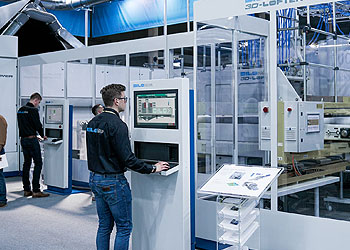 Perth Translation provides automotive and engineering translation services from Czech or to Czech, by Czech translators experienced in translating for technical product manuals and brochures.
Czech <> English Technical translators are comfortable and meticulous in finding out technical jargon and ensuring technical translations are read correctly by the product owners in each industry.
We manage large volume Czech <> English technical translations, and keep translation memory files to ensure past technical translations are not wasted for our repeat customers, helping clients to save on costs.
Upload documents for translation
Professional Czech Translator

Perth Translation provides professional Czech <> English translation services. You can use the form on this page to upload multiple files for a confirm quote and delivery time. Our Czech translator is ready to assist with your translation project.

Automotive Engineering Translations For All Major Languages
- Arabic Automotive Translation
- Chinese Automotive Translation
- Catalan Automotive Translation
- Croatian Automotive Translation
- Czech Automotive Translation
- Estonian Automotive Translation
- Dutch Automotive Translation
- Finnish Automotive Translation
- French Automotive Translation
- German Automotive Translation
- Greek Automotive Translation
- Hindi Automotive Translation
- Hungarian Automotive Translation
- Indonesian Automotive Translation
- Italian Automotive Translation
- Japanese Automotive Translation
- Korean Automotive Translation
- Macedonian Automotive Translation
- Malay Automotive Translation
- Norwegian Automotive Translation
- Persian Automotive Translation
- Polish Automotive Translation
- Portuguese Automotive Translation
- Punjabi Automotive Translation
- Romanian Automotive Translation
- Russian Automotive Translation
- Serbian Automotive Translation
- Slovak Automotive Translation
- Spanish Automotive Translation
- Swedish Automotive Translation
- Tagalog Automotive Translation
- Thai Automotive Translation
- Turkish Automotive Translation
- Ukrainian Automotive Translation
- Urdu Automotive Translation
- Vietnamese Automotive Translation
About the Czech Language
Czech is a West Slavic language of the Czech–Slovak group, spoken by over 10 million people. It is the official language of the Czech Republic, and is closely related to Slovak, to the point of mutual intelligibility to a very high degree. Its vocabulary has been extensively influenced by Latin and German.
Standard Czech contains ten basic vowel phonemes, and three diphthongs. The vowels are /a/, /ɛ/, /ɪ/, /o/, and /u/, and their long counterparts /aː/, /ɛː/, /iː/, /oː/ and /uː/. The diphthongs are /ou̯/, /au̯/ and /ɛu̯/; the last two are found only in loanwords such as auto "car" and euro "euro". Vowels are never reduced to schwa sounds when unstressed. In Czech orthography, the vowels are spelled as follows:
- Short: a, e/ě, i/y, o, u
- Long: á, é, í/ý, ó, ú/ů
- Diphthongs: ou, au, eu
The letter ě indicates that the previous consonant is palatalised (e.g. něco /ɲɛtso/), měkký /mɲɛkiː/). After a labial it represents /jɛ/ (e.g. běs /bjɛs/). Each word usually has primary stress on its first syllable, except for enclitics (minor, monosyllabic, unstressed syllables). In all words of more than two syllables, every odd-numbered syllable receives secondary stress. Stress is unrelated to vowel length, and the possibility of stressed short vowels and unstressed long vowels can be confusing to students whose native language combines the features (such as most varieties of English). When a word is preceded by a monosyllabic preposition, the stress moves to the preposition, e.g. do Prahy "to Prague".
Voiced consonants with unvoiced counterparts are unvoiced at the end of a word before a pause, and in consonant clusters voicing assimilation occurs, which matches voicing to the following consonant. The unvoiced counterpart of /ɦ/ is /x/.
Czech Translation Expertise
Czech has seven grammatical cases and distinguishes between animate and inanimate masculine nouns, each with different declension patterns — this complexity means a single noun can appear in over a dozen different forms. The language also features a complex consonant cluster system that affects transliteration of names, and uses the reflexive pronoun "se/si" extensively in ways that have no English parallel. Czech legal language employs extremely long subordinate clause chains that must be carefully unpacked to produce readable English while preserving legal precision.
Czech uses the Latin alphabet with háčky (carons) and čárky (acute accents) on specific letters: á, č, ď, é, ě, í, ň, ó, ř, š, ť, ú, ů, ý, ž. The letter ř represents a sound unique to Czech — a raised alveolar trill — that exists in no other major language. The ring accent (kroužek) on ů has a distinct historical origin from ú and both must be used correctly.
Common Czech Documents
Czech documents commonly requiring translation include the rodný list (birth certificate), oddací list (marriage certificate), výpis z rejstříku trestů (criminal record extract), and vysokoškolský diplom (university diploma). As an EU member, the Czech Republic issues multilingual EU standard civil status forms that can simplify translation requirements for some document types.
NAATI offers certification for Czech, though the number of accredited practitioners in Australia is limited given the relatively small Czech-speaking population. Some translators hold dual Czech-Slovak accreditation due to the mutual intelligibility of the two languages.
About the Czech Language
Czech contains the letter ř, which produces a sound so difficult that even native speakers of neighbouring Slavic languages struggle to pronounce it — it is a raised alveolar trill found in no other standard language on Earth. The word "robot" was coined by Czech writer Karel Čapek in his 1920 play R.U.R., derived from the Czech word robota meaning "forced labour." Czech also has one of the most complex consonant cluster systems of any language — the tongue-twister strč prst skrz krk ("stick a finger through the throat") is a complete grammatical sentence containing no vowels at all.
Industry Translation Requirements
Australia imports the vast majority of its vehicles and automotive components, requiring translation of technical manuals, safety specifications, and compliance documentation from manufacturers in Japan, South Korea, Germany, and China. Engineering firms operating across international supply chains need translated technical drawings, specifications, and quality management documentation to meet Australian Design Rules (ADRs) and Standards Australia requirements.
Automotive and engineering translation demands precision with technical specifications, torque values, material grades, and safety-critical terminology where errors can have serious consequences. Translators must understand Australian Design Rules numbering, SAE and ISO standards referenced in Australian engineering, and local terminology differences from source markets.
Common documents include vehicle compliance plates and ADR certification, workshop manuals and technical service bulletins, engineering drawings and specifications, material safety data sheets (SDS), quality management system documentation (ISO 9001), and import approval applications for the Department of Infrastructure.
Translated technical documentation must meet Australian Design Rules administered by the Department of Infrastructure, Transport, Regional Development and Communications. Imported vehicles require compliance with ADRs, and translated compliance documentation must be accurate for the Registered Automotive Workshop Scheme (RAWS) approval process.
