
Perth Translation Services » Serbian Automotive and Engineering Translation
Serbian Automotive and Engineering Translation
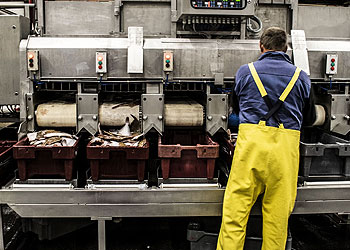 Perth Translation provides automotive and engineering translation services from Serbian or to Serbian, by Serbian translators experienced in translating for technical product manuals and brochures.
Serbian <> English Technical translators are comfortable and meticulous in finding out technical jargon and ensuring technical translations are read correctly by the product owners in each industry.
We manage large volume Serbian <> English technical translations, and keep translation memory files to ensure past technical translations are not wasted for our repeat customers, helping clients to save on costs.
Upload documents for translation
Professional Serbian Translator
Perth Translation provides professional Serbian <> English translation services. You can use the form on this page to upload multiple files for a confirm quote and delivery time. Our Serbian translator is ready to assist with your translation project.
Automotive Engineering Translations For All Major Languages
- Arabic Automotive Translation
- Chinese Automotive Translation
- Catalan Automotive Translation
- Croatian Automotive Translation
- Czech Automotive Translation
- Estonian Automotive Translation
- Dutch Automotive Translation
- Finnish Automotive Translation
- French Automotive Translation
- German Automotive Translation
- Greek Automotive Translation
- Hindi Automotive Translation
- Hungarian Automotive Translation
- Indonesian Automotive Translation
- Italian Automotive Translation
- Japanese Automotive Translation
- Korean Automotive Translation
- Macedonian Automotive Translation
- Malay Automotive Translation
- Norwegian Automotive Translation
- Persian Automotive Translation
- Polish Automotive Translation
- Portuguese Automotive Translation
- Punjabi Automotive Translation
- Romanian Automotive Translation
- Russian Automotive Translation
- Serbian Automotive Translation
- Slovak Automotive Translation
- Spanish Automotive Translation
- Swedish Automotive Translation
- Tagalog Automotive Translation
- Thai Automotive Translation
- Turkish Automotive Translation
- Ukrainian Automotive Translation
- Urdu Automotive Translation
- Vietnamese Automotive Translation
About the Serbian Language
Standard Serbian language uses both Cyrillic (ћирилица, ćirilica) and Latin script (latinica, латиница). Serbian is a rare example of synchronic digraphia, a situation where all literate members of a society have two interchangeable writing systems available to them. Media and publishers typically select one alphabet or another.
Although Serbian language authorities have recognized the official status of both scripts in contemporary Standard Serbian for more than half of a century now, due to historical reasons, the Cyrillic script was made the official script of Serbia's administration by the 2006 Constitution. However, the law does not regulate scripts in standard language, or standard language itself by any means, leaving the choice of script as a matter of personal preference and to the free will in all aspects of life (publishing, media, trade and commerce, etc.), except in government paperwork production and in official written communication with state officials, which have to be in Cyrillic.
In media, the public broadcaster, Radio Television of Serbia, predominantly uses the Cyrillic script whereas the privately run broadcasters, like RTV Pink, predominantly use the Latin script. Newspapers can be found in both scripts. Outdoor signage, including road signs and commercial displays, predominantly uses the Latin alphabet. Larger signs, especially those put up by the government, will often feature both alphabets. A survey from 2014 showed that 47% of the Serbian population favors the Latin alphabet whereas 36% favors the Cyrillic one.
Serbian Translation Expertise
Serbian has seven grammatical cases, three genders, and a complex verb system with aspect, tense, and mood all encoded in verb morphology. The language is uniquely digraphic — officially using both Cyrillic and Latin scripts interchangeably, and translators must be fluent in both. Serbian shares high mutual intelligibility with Croatian, Bosnian, and Montenegrin, but legal and administrative vocabulary has diverged since the breakup of Yugoslavia, and documents must be translated using the terminology appropriate to the issuing country.
Serbian is the only European standard language that actively uses two complete alphabets — Cyrillic (30 letters) and Latin (30 letters) — with a one-to-one correspondence between them. The Cyrillic alphabet includes unique letters like lj, nj, and dz (single letters representing specific sounds). Official documents may use either script, and translators must note which was used in the source.
Common Serbian Documents
Serbian documents commonly requiring translation include the izvod iz matične knjige rođenih (birth certificate extract), uverenje o državljanstvu (citizenship certificate), diploma o stečenom obrazovanju (education diploma), and uverenje o nekažnjavanju (criminal record certificate).
NAATI certification for Serbian is well supported, with certified translators available in Melbourne, Sydney, Perth, and other cities. The large Serbian-Australian community ensures steady demand and a reliable supply of qualified translators across the country.
About the Serbian Language
Serbian is the only European language that actively uses two complete alphabets in daily life — Cyrillic and Latin — with perfect one-to-one letter correspondence between them, and most Serbians are fully literate in both scripts from primary school. The Serbian Cyrillic alphabet was reformed by Vuk Stefanović Karadžić in the 19th century with the principle "write as you speak, read as it is written," making it one of the most phonetically consistent writing systems in the world. Despite Serbia's relatively small population of about 6.6 million, the Serbian diaspora is estimated at over 3.5 million people worldwide — meaning more than a third of all ethnic Serbs live outside Serbia.
Industry Translation Requirements
Australia imports the vast majority of its vehicles and automotive components, requiring translation of technical manuals, safety specifications, and compliance documentation from manufacturers in Japan, South Korea, Germany, and China. Engineering firms operating across international supply chains need translated technical drawings, specifications, and quality management documentation to meet Australian Design Rules (ADRs) and Standards Australia requirements.
Automotive and engineering translation demands precision with technical specifications, torque values, material grades, and safety-critical terminology where errors can have serious consequences. Translators must understand Australian Design Rules numbering, SAE and ISO standards referenced in Australian engineering, and local terminology differences from source markets.
Common documents include vehicle compliance plates and ADR certification, workshop manuals and technical service bulletins, engineering drawings and specifications, material safety data sheets (SDS), quality management system documentation (ISO 9001), and import approval applications for the Department of Infrastructure.
Translated technical documentation must meet Australian Design Rules administered by the Department of Infrastructure, Transport, Regional Development and Communications. Imported vehicles require compliance with ADRs, and translated compliance documentation must be accurate for the Registered Automotive Workshop Scheme (RAWS) approval process.
