
Perth Translation Services » Spanish Energy and Mining Translation
Energy Mining Spanish Translation
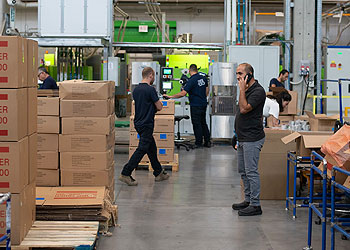 Whether you are extracting oil and gas, liquid or solid minerals, we have English <> Spanish translators with the background knowledge of your operating procedures and industry specific terminology.
Our belief in quality energy and mining Spanish translations means our translators make full effort to investigate the best Spanish translation for the document context and build upon past knowledge and experience from our existing clients.
Examples of document translations we provide for the energy mining sector include:
- Drilling programmes and expedition reports
- Employment Agreement
- Field development economics and budgeting documents
- Geophysical and geotechnical logs
- Health and Safety Documents
- Legal Agreements
- Operation and maintenance manuals
- Pipeline Inspection Reports
- Safety Signage and Guidelines
- Seismic data acquisition documents
- Technical and CAD drawings
- Tender Documentation
- Video and audio
- Well legislation, procedures and reports
Enquire with us today with your project requirement.
Upload your documents for translation
Professional Spanish Translator

Perth Translation provides professional Spanish <> English translation services. You can use the form on this page to upload multiple files for a confirm quote and delivery time. Our Spanish translator is ready to assist with your translation project.

Energy Mining Subject Translations For All Major Languages
- Arabic energy mining translation
- Chinese energy mining translation
- Catalan energy mining translation
- Croatian energy mining translation
- Czech energy mining translation
- Estonian energy mining translation
- Dutch energy mining translation
- Finnish energy mining translation
- French energy mining translation
- German energy mining translation
- Greek energy mining translation
- Hindi energy mining translation
- Hungarian energy mining translation
- Indonesian energy mining translation
- Italian energy mining translation
- Japanese energy mining translation
- Korean energy mining translation
- Macedonian energy mining translation
- Malay energy mining translation
- Norwegian energy mining translation
- Persian energy mining translation
- Polish energy mining translation
- Portuguese energy mining translation
- Punjabi energy mining translation
- Romanian energy mining translation
- Russian energy mining translation
- Serbian energy mining translation
- Slovak energy mining translation
- Spanish energy mining translation
- Swedish energy mining translation
- Tagalog energy mining translation
- Thai energy mining translation
- Turkish energy mining translation
- Ukrainian energy mining translation
- Urdu energy mining translation
- Vietnamese energy mining translation
About the Spanish Language
The Spanish language is a Western Romance language that originated in the Castile region of Spain and today has hundreds of millions of native speakers in Latin America and Spain.
Beginning in the early 16th century, Spanish was taken to the colonies of the Spanish Empire, most notably to the Americas, as well as territories in Africa, Oceania and the Philippines. Around 75% of modern Spanish vocabulary is derived from Latin. Ancient Greek has also contributed substantially to Spanish vocabulary, especially through Latin, where it had a great impact.
The Spanish language evolved from Vulgar Latin, which was brought to the Iberian Peninsula by the Romans during the Second Punic War, beginning in 210 BC. Previously, several pre-Roman languages (also called Paleohispanic languages)—some related to Latin via Indo-European, and some that are not related at all—were spoken in the Iberian Peninsula. These languages included Basque (still spoken today), Iberian, Celtiberian and Gallaecian.
The first documents to show traces of what is today regarded as the precursor of modern Spanish are from the 9th century. Throughout the Middle Ages and into the modern era, the most important influences on the Spanish lexicon came from neighboring Romance languages—Mozarabic (Andalusi Romance), Navarro-Aragonese, Leonese, Catalan, Portuguese, Galician, Occitan, and later, French and Italian. Spanish also borrowed a considerable number of words from Arabic, as well as a minor influence from the Germanic Gothic language through the migration of tribes and a period of Visigoth rule in Iberia. In addition, many more words were borrowed from Latin through the influence of written language and the liturgical language of the Church. The loanwords were taken from both Classical Latin and Renaissance Latin, the form of Latin in use at that time.
According to the theories of Ramón Menéndez Pidal, local sociolects of Vulgar Latin evolved into Spanish, in the north of Iberia, in an area centered in the city of Burgos, and this dialect was later brought to the city of Toledo, where the written standard of Spanish was first developed, in the 13th century. In this formative stage, Spanish developed a strongly differing variant from its close cousin, Leonese, and, according to some authors, was distinguished by a heavy Basque influence (see Iberian Romance languages). This distinctive dialect spread to southern Spain with the advance of the Reconquista, and meanwhile gathered a sizable lexical influence from the Arabic of Al-Andalus, much of it indirectly, through the Romance Mozarabic dialects (some 4,000 Arabic-derived words, make up around 8% of the language today). The written standard for this new language was developed in the cities of Toledo, in the 13th to 16th centuries, and Madrid, from the 1570s.
Spanish Translation Expertise
Spanish translation must account for significant regional variation between Latin American and Peninsular Spanish, with differences in vocabulary, grammar (notably the use of voseo in Argentina and Central America), and legal terminology across over 20 Spanish-speaking countries. The subjunctive mood is heavily used in formal and legal documents and must be rendered precisely. Gendered language conventions are also evolving, and official documents from different countries may follow different formatting standards for names, dates, and addresses.
Spanish uses the Latin alphabet with the addition of ñ and the use of acute accents (á, é, í, ó, ú) to indicate stress and distinguish homophones. The inverted question mark (¿) and exclamation mark (¡) are unique to Spanish orthography and appear at the beginning of interrogative and exclamatory sentences.
Common Spanish Documents
Commonly translated documents include actas de nacimiento (birth certificates), actas de matrimonio (marriage certificates), antecedentes penales (police clearances), and academic transcripts from universities across Latin America and Spain.
NAATI offers certification for Spanish translators, and it is one of the most widely available NAATI-certified language pairs in Australia with a strong pool of accredited professionals. Spanish translations certified by NAATI are routinely accepted by the Department of Home Affairs, VETASSESS, and other Australian authorities.
About the Spanish Language
Spanish is the second most spoken native language in the world with over 475 million native speakers, surpassed only by Mandarin Chinese. The Royal Spanish Academy (Real Academia Española) officially removed "ch" and "ll" as separate alphabet letters in 2010 after centuries of inclusion. Spanish is an official language in 20 countries across four continents, and the inverted question and exclamation marks (¿ ¡) are used in no other modern language.
Industry Translation Requirements
Australia's resources sector operates with significant international investment and workforces, requiring translation of technical reports, environmental impact assessments, and safety documentation across multiple languages. Joint ventures with companies from Japan, China, South Korea, and India mean that geological surveys, feasibility studies, and operational manuals frequently require certified translation for regulatory and commercial purposes.
Mining and energy translation requires expertise in geological terminology, JORC Code reporting standards, and safety management system language specific to Australian operations. Translators must understand the difference between JORC-compliant resource estimates and foreign reporting codes, as mistranslation can have material financial and legal consequences.
Common documents include JORC Code resource and reserve statements, environmental impact statements for state EPA submissions, mine safety management plans, joint venture agreements, workforce safety inductions in multiple languages, and geological survey reports from international exploration projects.
Translated mining reports must comply with the JORC Code 2012 for ASX-listed companies, and environmental documentation must meet state-based EPA requirements. Work health and safety documentation must comply with the model WHS Act, and translated safety materials for multilingual workforces must meet Safe Work Australia standards.
