Shire of Peppermint Grove Chinese Translation Services
Perth Translation Services » Shire of Peppermint Grove Chinese Translation Service
Shire of Peppermint Grove Chinese Translation Services
 Chinese to English translation is the single highest-demand language pair in Australia, reflecting the massive Chinese-speaking community across all major cities. NAATI certifies Mandarin and Cantonese as separate languages, and translators must determine whether a document uses Simplified Chinese (mainland China, Singapore) or Traditional Chinese (Taiwan, Hong Kong) — using the wrong variant can invalidate a translation for its intended purpose. The absence of grammatical markers for tense, number, and gender in Chinese means translators must make explicit interpretive decisions when rendering documents into English. Clients span the full spectrum from skilled visa applicants and international students to business migrants and family reunion cases.
Upload Document For Translation

Shire of Peppermint Grove Chinese Translator Services
Chinese translator for certified translation services:
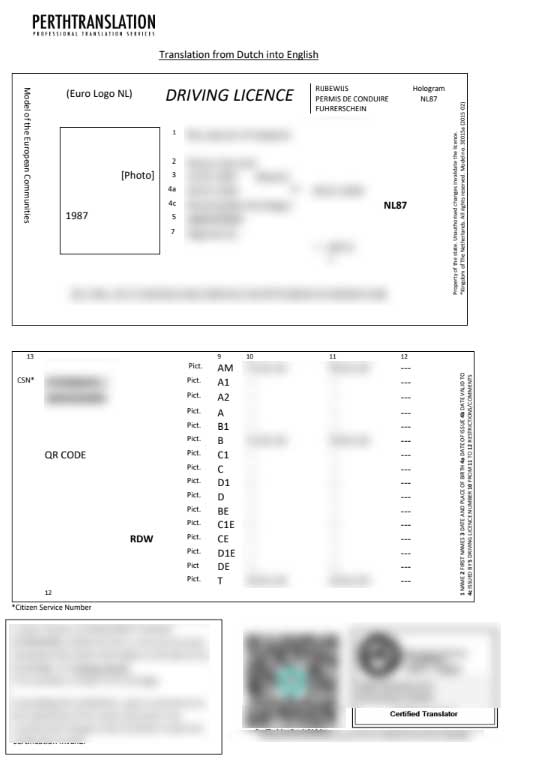
- Chinese driving license translation
- Chinese financial translation and bank statement translations
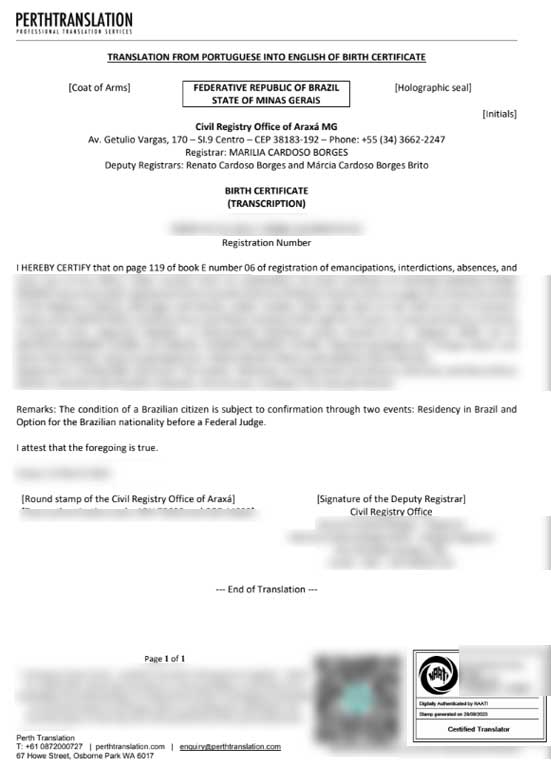
- Chinese birth certificate translation
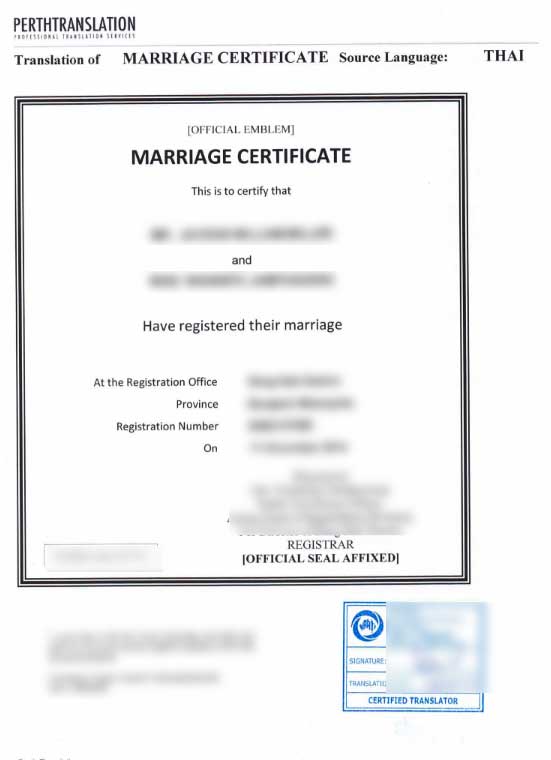
- Chinese marriage certificate translation
- Chinese name-change certificate translation
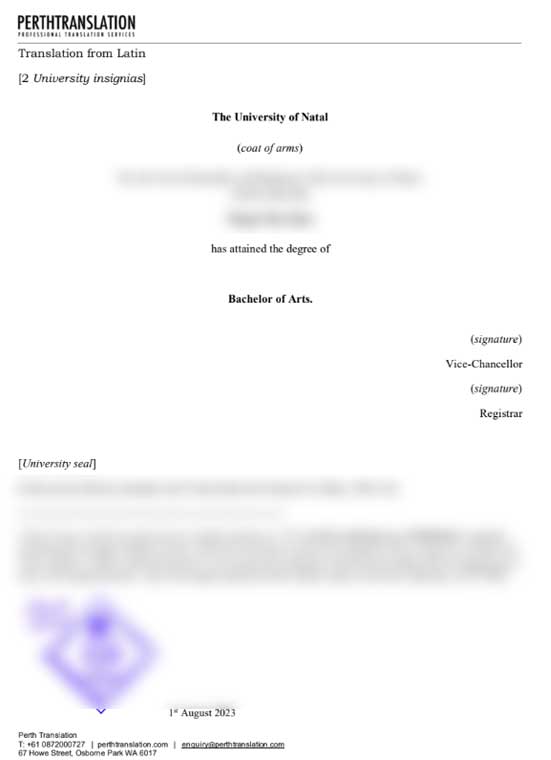
- Chinese degree translation
- Chinese diploma translation
- Chinese school transcript translation
- Chinese passport translation
- Chinese police report translation
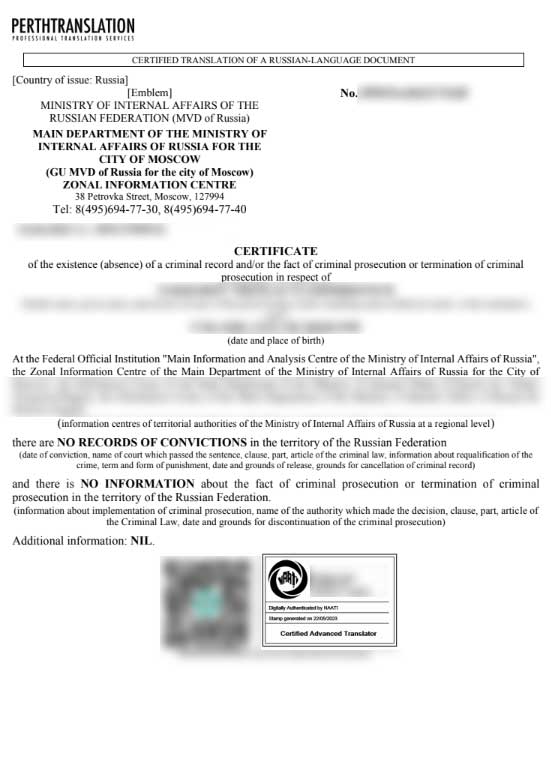
- Chinese police check translation
- Chinese personal letters and cards
- Chinese utility bill translations
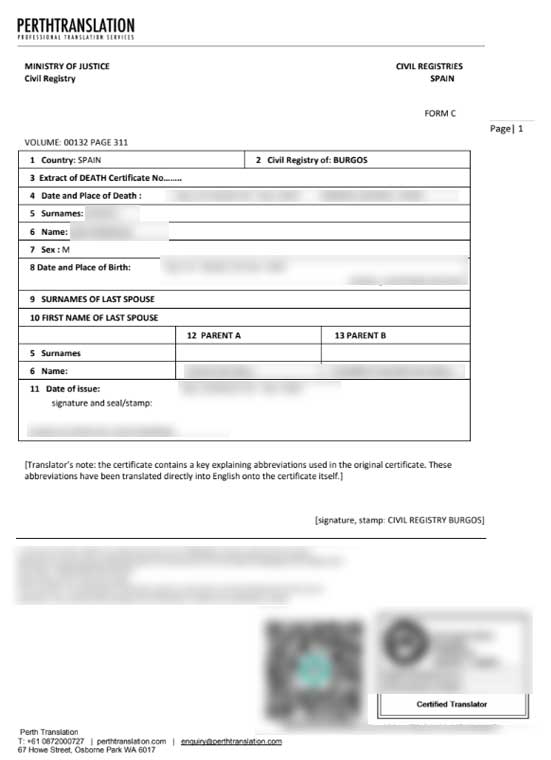
- Chinese death certificate translation
Perth Translation provides fast and affordable Chinese translation services in the Shire of Peppermint Grove for all types of personal documents by NAATI translators.

Shire of Peppermint Grove
The Shire of Peppermint Grove is a small local government area in western metropolitan Perth, the capital of Western Australia, between Mosman Park and Claremont about 12 km southwest of Perth's central business district. The Shire of Peppermint Grove, at 1.1 square kilometres (0.42 sq mi), is the smallest local government area in Australia.
Shire of Peppermint Grove History
From the Peppermint Grove Shire Council Website: https://www.peppermintgrove.wa.gov.au/
Peppermint Grove's long history goes back to 1835 when an innkeeper named John Butler was given a grant of land consisting of 150 acres along the north bank of the Swan River, the area now known as Peppermint Grove.
The land changed hands a number of times over the years, and in 1891, subdivision commenced when the land was purchased by a syndicate of George Leake, Charles Crossland and Alexander Forrest.
In its earlier days, Peppermint Grove was thickly wooded with tuarts, jarrahs, red gum, banksia, native pines, hollies and the beautiful peppermint trees which inspired its name. Brumbies roamed in the area, along with native cats, wallabies and an abundance of birds.
The subdivisions sold fast for between 7 and 12 pounds each (around $15 – $25) – an amount which is hard to comprehend today when vacant lots are selling for approximately up $3500 per square metre.
One of the earliest settlers was Edward Keane who later became Mayor of Perth. Another influential landowner was John Forrest, later to be Lord Forrest, Premier of Western Australia.
In 1895, after strong representations from residents, the area was gazetted a Road District, and the Peppermint Grove Road Board was established. Its main efforts were directed at providing essential roads and footpaths. The Road Board was the forerunner to the present Shire Council.
In those early days, the Premier of the day was at first reluctant to declare Peppermint Grove a Road District because of its small size, but the residents won through. Today, Peppermint Grove has the unique status of being the smallest municipality in Western Australia, covering just 1.5 square kilometres of land. From time to time, there have been calls for boundary change, but these have always been firmly rebuffed by residents.
The Shire has a population of over 1600, with a large proportion of residents who have long established links with the Shire going back over many generations. The Council today consists of seven Councillors, including a Shire President. There are five men and two women Councillors elected. The Shire’s Chief Executive Officer is readily accessible, and there is a marked absence of unnecessary bureaucracy. The Council recognises that a key objective of residents is to maintain the unique character of Peppermint Grove, and its policies and decisions are formulated to that end. Many of the Council’s strategies and initiatives are specifically directed at helping to preserve, maintain and enhance the ambience of Peppermint Grove.
Shire of Peppermint Grove Suburbs
Peppermint GroveOur NAATI accredited Chinese translators in Perth provide official Chinese to English and English to Chinese translations in both Simplified and Traditional Chinese for all document types, accepted by the Department of Home Affairs and Australian authorities.
我们在珀斯的NAATI认证中文翻译人员提供简体和繁体中文的中英互译官方翻译服务,适用于所有文件类型,获得内政部和澳大利亚当局认可。
About Chinese Translation
Chinese translation requires determining whether the source or target should use Simplified Chinese (used in mainland China, Singapore, Malaysia) or Traditional Chinese (used in Taiwan, Hong Kong, Macau) — these are not interchangeable and using the wrong variant can invalidate a document for its intended purpose. Beyond character sets, vocabulary and phrasing conventions differ between regions. Chinese has no grammatical inflection — no tense, number, or gender markers — so translators must infer and explicitly state in English what is implied by context in Chinese, particularly dates, quantities, and temporal references in legal documents.
Chinese uses logographic characters (hanzi) — Simplified characters average fewer strokes and are used in mainland China, while Traditional characters retain historical forms and are used in Taiwan and Hong Kong. A literate adult typically knows 6,000–8,000 characters. There is no alphabet; transliteration uses Pinyin (mainland) or Zhuyin/Bopomofo (Taiwan). Documents may also contain vertical text layout in Traditional Chinese contexts.
Common Chinese Documents
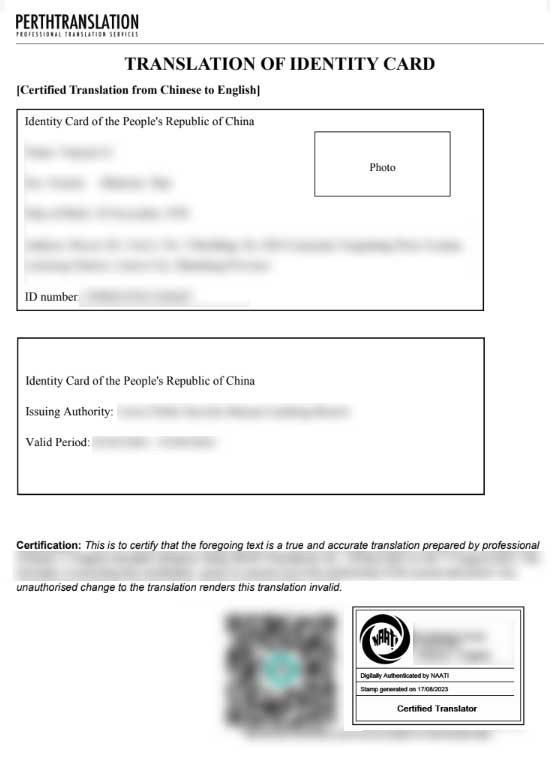
Chinese documents commonly requiring translation include the 户口本 (hùkǒu běn, household registration booklet), 出生医学证明 (chūshēng yīxué zhèngmíng, birth medical certificate), 结婚证 (jiéhūn zhèng, marriage certificate), 公证书 (gōngzhèng shū, notarial certificate), and 学位证书 (xuéwèi zhèngshū, degree certificate). Mainland Chinese documents typically require notarisation through a Chinese notary public office before they can be authenticated for use in Australia.
Chinese Document Requirements
Chinese civil documents from mainland China are issued by the local Civil Affairs Bureau (民政局) or Public Security Bureau (公安局) and carry red official stamps (公章). Documents include the hukou (household registration), birth certificates, marriage certificates, and notarial certificates issued by notary public offices. China is not a Hague Apostille Convention member, so documents require authentication by the Chinese Ministry of Foreign Affairs followed by consular legalisation at the Australian Embassy in Beijing or consulates.
NAATI offers certification for both Mandarin and Cantonese, which are classified as separate languages for accreditation purposes despite sharing a writing system. Chinese is among the highest-demand languages for NAATI certification, with a large pool of accredited translators across Australia.
About the Chinese Language
Chinese is the only major modern language that uses a logographic writing system — each character represents a meaning rather than a sound, which means speakers of mutually unintelligible dialects (Mandarin, Cantonese, Hokkien, Shanghainese) can read the same text. The Chinese writing system has been in continuous use for over 3,400 years, making it the oldest still-active writing system in the world. Simplified Chinese was introduced by the People's Republic of China in the 1950s and 1960s, reducing characters like 龍 (dragon) to 龙 — but this means there are now effectively two written standards that a translator must master.
Chinese Speakers in the Shire of Peppermint Grove Area
Chinese-speaking Australians form the largest non-English language group, with over 650,000 Mandarin speakers and over 280,000 Cantonese speakers recorded in census data. Communities are concentrated in Sydney (Chatswood, Hurstville, Burwood), Melbourne (Box Hill, Glen Waverley), and increasingly in Perth and Brisbane, with migration spanning generations from the gold rush era to modern skilled and investment visa programs.
About Shire of Peppermint Grove
The Shire of Peppermint Grove is the smallest local government area in Western Australia, covering just 1.5 square kilometres on the Swan River foreshore in Perth's western suburbs. It consists solely of the suburb of Peppermint Grove, situated between Mosman Park and Cottesloe. The area is one of Perth's most exclusive and affluent residential enclaves, featuring large heritage homes on tree-lined streets.
Peppermint Grove has a relatively small but internationally connected population, with residents from the United Kingdom, South Africa, and various European and Asian countries. The area's affluence attracts business migrants and professionals from overseas, and its proximity to western suburbs schools attracts families from diverse international backgrounds.
The Shire of Peppermint Grove, despite its small size, conducts citizenship ceremonies and provides community services to its residents. The council focuses on maintaining the area's heritage character and residential amenity, with community information and services available through the shire office.
Key facilities include the Peppermint Grove Community Library and the shire offices on Stirling Highway. Due to the area's small size, residents access most major services — including Centrelink, courts, and hospital facilities — in neighbouring Cottesloe, Claremont, or Fremantle.
NAATI certified translation delivery that you can trust, all services based in Australia. To get started, please email your documents to: enquiry@perthtranslation.com.