City of Gosnells Serbian Translation Services
Perth Translation Services » City of Gosnells Serbian Translation Service
City of Gosnells Serbian Translation Services
 Serbian to English translation serves one of Australia's largest European diaspora communities, with well-established demand driven by decades of migration from the former Yugoslavia. NAATI-certified Serbian translators are readily available, particularly in Melbourne and Sydney, and Serbian is among the better-supported Balkan language pairs nationally. Clients most commonly need translations of civil status documents for citizenship applications, pension transfers from the Serbian PIO fund, and academic credentials for professional registration. Translators must be comfortable working with both Cyrillic and Latin script documents and navigating the historical complexity of records issued under Yugoslavia, Serbia and Montenegro, and the modern Republic of Serbia.
Upload Document For Translation

City of Gosnells Serbian Translator Services
Serbian translator for certified translation services:
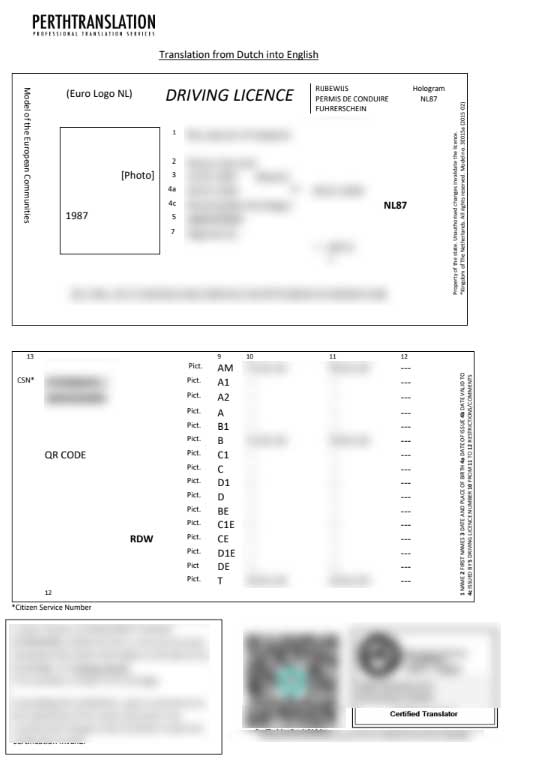
- Serbian driving license translation
- Serbian financial translation and bank statement translations
- Serbian birth certificate translation
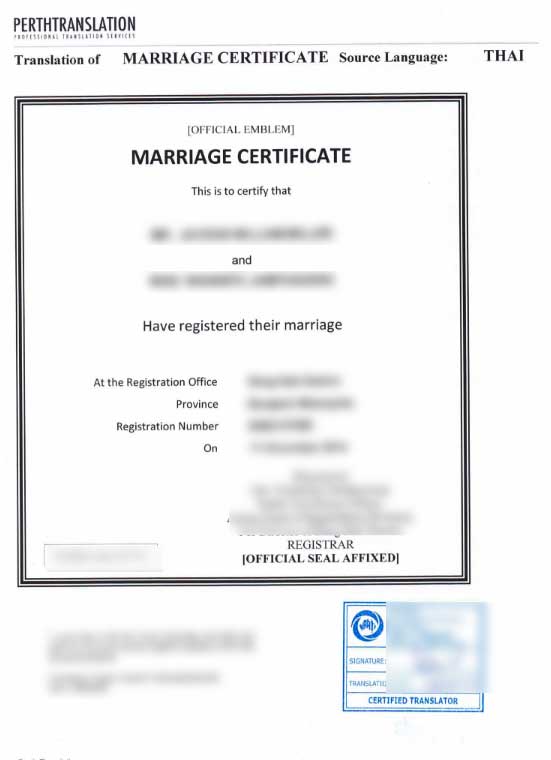
- Serbian marriage certificate translation
- Serbian name-change certificate translation
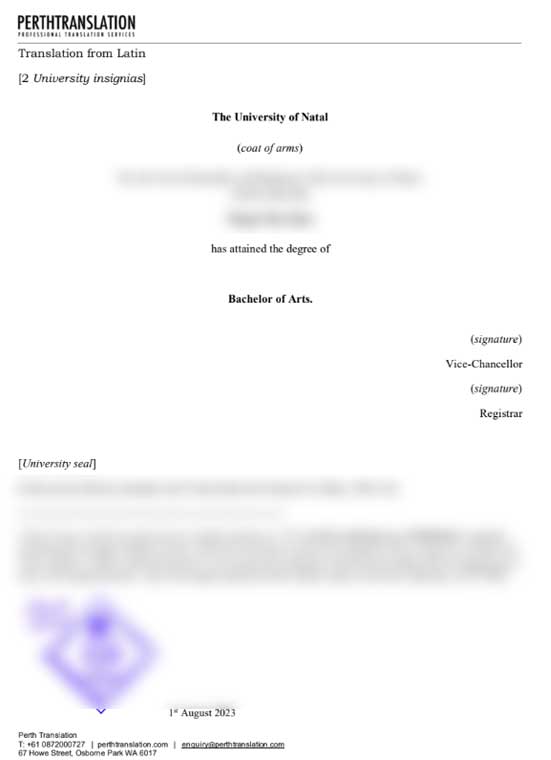
- Serbian degree translation
- Serbian diploma translation
- Serbian school transcript translation
- Serbian passport translation
- Serbian police report translation
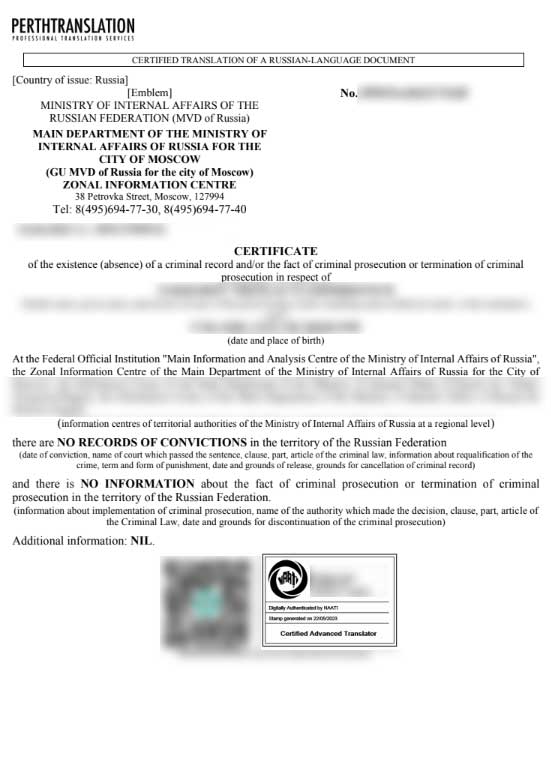
- Serbian police check translation
- Serbian personal letters and cards
- Serbian utility bill translations
- Serbian death certificate translation
Perth Translation provides fast and affordable Serbian translation services in the City of Gosnells for all types of personal documents by NAATI translators.

City of Gosnells
The City of Gosnells is a local government area in the southeastern suburbs of the Western Australian capital city of Perth, located northwest of Armadale and about 20 kilometres (12 mi) southeast of Perth's central business district. The City covers an area of 128 square kilometres (49.42 sq mi), much of which is state forest rising into the Darling Scarp to the east, and had a population of approximately 118,000 at the 2016 Census.
City of Gosnells History
The name Gosnells dates back to 1862 when Charles Gosnell who was the owner of London cosmetic company John Gosnell & Co., bought Canning location 16 from the Davis family who were the original grantees in 1829. While the purchase of the land was a personal investment by Charles Gosnell, when the land was sold to developers in 1903 the developers used the association to the well known cosmetic company, claiming it had bought the land because of its fertile soil to grow flowers for the manufacture of its perfume range. The abundance of the Arum Lily (Zantedeschia aethiopica) in the area and the marketing by the developers contributed to the myth about the Gosnell company, being so successful that the Gosnells railway station was constructed on the Armadale line in 1903.
Gosnells Road District was created out of the abolished Canning Road District on 1 July 1907. Industry in the form of brickworks were introduced to Beckenham in the early 1990s. Between 1912 and 1915 fruit fly wiped out nearly all of the stone fruit crops in the region and many farmers turned to dairying and market gardening. Irrigation was vital due to sandy, infertile soils of Canning Vale. In 1923, the City received land from Jandakot Road District when that entity was abolished. Significant development did not occur until the post-war years. The population grew from 7,400 in 1954 to about 11,000 in 1966, and then to 21,000 in 1970. On 1 July 1961, Gosnells Road District became a Shire following enactment of the Local Government Act 1960. On 1 July 1973 it became a Town and exactly four years later it attained City status.
City of Gosnells Suburbs
Beckenham, Canning Vale, Gosnells, Huntingdale, Kenwick, Langford, Maddington, Martin, Orange Grove, Southern River, ThornlieOur NAATI accredited Serbian translators in Perth provide official Serbian to English and English to Serbian translations for all document types, accepted by the Department of Home Affairs and Australian authorities.
Наши НААТИ акредитовани преводиоци за српски језик у Перту пружају званичне преводе са српског на енглески и са енглеског на српски за све врсте докумената, признате од Министарства унутрашњих послова и аустралијских власти.
About Serbian Translation
Serbian has seven grammatical cases, three genders, and a complex verb system with aspect, tense, and mood all encoded in verb morphology. The language is uniquely digraphic — officially using both Cyrillic and Latin scripts interchangeably, and translators must be fluent in both. Serbian shares high mutual intelligibility with Croatian, Bosnian, and Montenegrin, but legal and administrative vocabulary has diverged since the breakup of Yugoslavia, and documents must be translated using the terminology appropriate to the issuing country.
Serbian is the only European standard language that actively uses two complete alphabets — Cyrillic (30 letters) and Latin (30 letters) — with a one-to-one correspondence between them. The Cyrillic alphabet includes unique letters like lj, nj, and dz (single letters representing specific sounds). Official documents may use either script, and translators must note which was used in the source.
Common Serbian Documents
Serbian documents commonly requiring translation include the izvod iz matične knjige rođenih (birth certificate extract), uverenje o državljanstvu (citizenship certificate), diploma o stečenom obrazovanju (education diploma), and uverenje o nekažnjavanju (criminal record certificate).
Serbian Document Requirements
Serbian civil documents are issued by the municipal registrar (maticnar) and include izvod iz maticne knjige rodjenih (birth certificate extract) and uverenje o drzavljanstvu (citizenship certificate). Documents may be in Cyrillic or Latin script depending on the municipality and era. Serbia is a Hague Convention member, with apostille issued by courts. Documents from before 2006 may reference Serbia and Montenegro, and pre-1992 documents reference Yugoslavia.
NAATI certification for Serbian is well supported, with certified translators available in Melbourne, Sydney, Perth, and other cities. The large Serbian-Australian community ensures steady demand and a reliable supply of qualified translators across the country.
About the Serbian Language
Serbian is the only European language that actively uses two complete alphabets in daily life — Cyrillic and Latin — with perfect one-to-one letter correspondence between them, and most Serbians are fully literate in both scripts from primary school. The Serbian Cyrillic alphabet was reformed by Vuk Stefanović Karadžić in the 19th century with the principle "write as you speak, read as it is written," making it one of the most phonetically consistent writing systems in the world. Despite Serbia's relatively small population of about 6.6 million, the Serbian diaspora is estimated at over 3.5 million people worldwide — meaning more than a third of all ethnic Serbs live outside Serbia.
Serbian Speakers in the City of Gosnells Area
The Serbian community in Australia is one of the largest outside the Balkans, with over 95,000 people of Serbian ancestry. Melbourne hosts the largest concentration, particularly in the southeastern suburbs, followed by Sydney, Perth, and Adelaide. Migration was driven by post-WWII displacement, 1960s-70s guest worker programs, and the 1990s Yugoslav wars.
About City of Gosnells
The City of Gosnells is located in Perth's south-eastern suburbs, approximately 20 kilometres from the CBD. It includes the suburbs of Gosnells, Thornlie, Huntingdale, Southern River, Maddington, Kenwick, and Langford. The area ranges from established suburban development in the north to newer residential estates in the south near the Canning River regional park.
Gosnells is one of Perth's most culturally diverse local government areas, with particularly large communities from Vietnam, India, the Philippines, China, and various African nations. Thornlie and Gosnells have significant Vietnamese and Chinese populations, reflected in local businesses and community organisations. The council supports Harmony Week activities and multicultural community events.
The City of Gosnells runs community development programs for CALD residents and holds regular citizenship ceremonies. The council offers community grants to support multicultural groups and has worked with settlement agencies such as the Metropolitan Migrant Resource Centre to assist new arrivals.
Key facilities include the Gosnells Library, Thornlie Library, and the Langford Library. The Thornlie Square and Forest Lakes shopping centres provide local services. Centrelink services are accessible at the Cannington office nearby, and the Armadale Magistrates Court services the broader area.
NAATI certified translation delivery that you can trust, all services based in Australia. To get started, please email your documents to: enquiry@perthtranslation.com.