City of Gosnells Dutch Translation Services
Perth Translation Services » City of Gosnells Dutch Translation Service
City of Gosnells Dutch Translation Services
 Dutch to English translation in Australia serves one of the country's oldest and most established migrant communities, with demand typically focused on older historical documents and the precise certified translations required by Australian government authorities. NAATI offers Dutch certification, though the pool of practitioners is limited since most Dutch and Flemish migrants have strong English proficiency. The main translation challenges include distinguishing between Netherlands Dutch and Belgian Flemish legal terminology, correctly handling the extensive compound noun system, and navigating spelling differences between pre-1995 and post-2005 orthographic standards. Clients most commonly need translations of birth and marriage certificates, inheritance documents, and pension records.
Upload Document For Translation

City of Gosnells Dutch Translator Services
Dutch translator for certified translation services:
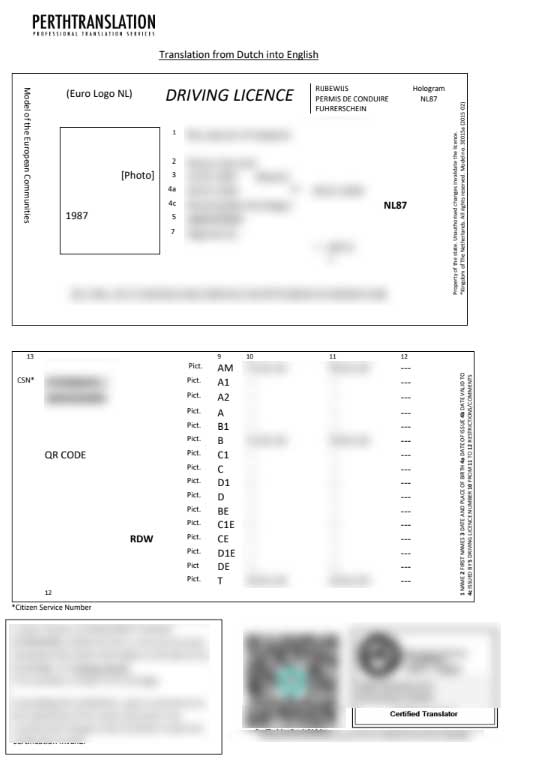
- Dutch driving license translation
- Dutch financial translation and bank statement translations
- Dutch birth certificate translation
- Dutch marriage certificate translation
- Dutch name-change certificate translation
- Dutch degree translation
- Dutch diploma translation
- Dutch school transcript translation
- Dutch passport translation
- Dutch police report translation
- Dutch police check translation
- Dutch personal letters and cards
- Dutch utility bill translations
- Dutch death certificate translation
Perth Translation provides fast and affordable Dutch translation services in the City of Gosnells for all types of personal documents by NAATI translators.

City of Gosnells
The City of Gosnells is a local government area in the southeastern suburbs of the Western Australian capital city of Perth, located northwest of Armadale and about 20 kilometres (12 mi) southeast of Perth's central business district. The City covers an area of 128 square kilometres (49.42 sq mi), much of which is state forest rising into the Darling Scarp to the east, and had a population of approximately 118,000 at the 2016 Census.
City of Gosnells History
The name Gosnells dates back to 1862 when Charles Gosnell who was the owner of London cosmetic company John Gosnell & Co., bought Canning location 16 from the Davis family who were the original grantees in 1829. While the purchase of the land was a personal investment by Charles Gosnell, when the land was sold to developers in 1903 the developers used the association to the well known cosmetic company, claiming it had bought the land because of its fertile soil to grow flowers for the manufacture of its perfume range. The abundance of the Arum Lily (Zantedeschia aethiopica) in the area and the marketing by the developers contributed to the myth about the Gosnell company, being so successful that the Gosnells railway station was constructed on the Armadale line in 1903.
Gosnells Road District was created out of the abolished Canning Road District on 1 July 1907. Industry in the form of brickworks were introduced to Beckenham in the early 1990s. Between 1912 and 1915 fruit fly wiped out nearly all of the stone fruit crops in the region and many farmers turned to dairying and market gardening. Irrigation was vital due to sandy, infertile soils of Canning Vale. In 1923, the City received land from Jandakot Road District when that entity was abolished. Significant development did not occur until the post-war years. The population grew from 7,400 in 1954 to about 11,000 in 1966, and then to 21,000 in 1970. On 1 July 1961, Gosnells Road District became a Shire following enactment of the Local Government Act 1960. On 1 July 1973 it became a Town and exactly four years later it attained City status.
City of Gosnells Suburbs
Beckenham, Canning Vale, Gosnells, Huntingdale, Kenwick, Langford, Maddington, Martin, Orange Grove, Southern River, ThornlieOur NAATI accredited Dutch translators in Perth provide official Dutch to English and English to Dutch translations for all document types, accepted by the Department of Home Affairs and Australian authorities.
Onze NAATI-geaccrediteerde Nederlandse vertalers in Perth bieden officiële vertalingen van het Nederlands naar het Engels en van het Engels naar het Nederlands voor alle documenttypen, geaccepteerd door het Department of Home Affairs en Australische autoriteiten.
About Dutch Translation
Dutch uses a V2 (verb-second) word order in main clauses but shifts to verb-final in subordinate clauses, creating sentence structures that require significant rearrangement in English translation. The language has a productive compound noun system where words are joined without spaces — Arbeidsongeschiktheidsverzekering (disability insurance) is a single word — and splitting these incorrectly changes meaning. Translators must also distinguish between documents from the Netherlands and Belgium (Flemish), as legal terminology, administrative structures, and even spelling conventions differ between the two.
Dutch uses the Latin alphabet with the digraph IJ (ij) often treated as a single letter — it is capitalised as IJ (both letters) at the start of words and proper names (e.g. IJsselmeer). Diacritics include the trema (ë, ü) used to indicate separate vowel pronunciation in adjacent vowels, and the acute accent (é) to mark stress. Dutch spelling was reformed in 1995 and 2005, so older documents may use different conventions.
Common Dutch Documents
Dutch documents commonly requiring translation include the uittreksel geboorteakte (birth certificate extract), huwelijksakte (marriage certificate), verklaring omtrent het gedrag (certificate of good conduct), and getuigschrift (educational diploma). Belgian Dutch documents use similar terminology but follow the Belgian civil system through local gemeenten (communes). The Netherlands also issues international multilingual extracts under the CIEC convention.
Dutch Document Requirements
Dutch civil documents from the Netherlands are issued by the municipality (gemeente) where the event was registered, maintained in the Basisregistratie Personen (BRP). Standard documents include birth extracts (uittreksel geboorteakte), marriage certificates, and certificates of no impediment. The Netherlands is a founding member of the Hague Apostille Convention (the treaty is named after the Dutch city), so apostilles are standard. Belgian Dutch documents follow the Belgian civil registration system through local communes.
NAATI offers certification for Dutch translators, though practitioners are relatively few given that most Dutch and Flemish migrants to Australia have strong English proficiency. Demand is typically for older documents or for the precise certified translations required by Australian government authorities.
About the Dutch Language
Dutch is the parent language of Afrikaans, making it one of the few European languages to have given birth to an entirely separate language on another continent. The Hague Apostille Convention — the international treaty that certifies documents for use in foreign countries — is literally named after the Dutch city of The Hague where it was signed in 1961, making the Netherlands the birthplace of modern international document authentication. Dutch compound words can reach extraordinary lengths: meervoudigepersoonlijkheidsstoornis (multiple personality disorder) is a single 38-letter word, and the language routinely creates new compounds by simply joining existing words without spaces.
Dutch Speakers in the City of Gosnells Area
The Dutch community in Australia is well-established, with over 80,000 Netherlands-born residents and a much larger population of Dutch descent. Post-WWII migration under the assisted passage scheme brought large numbers in the 1950s–1960s, settling across all major cities. The community is highly integrated, with subsequent generations predominantly English-speaking.
About City of Gosnells
The City of Gosnells is located in Perth's south-eastern suburbs, approximately 20 kilometres from the CBD. It includes the suburbs of Gosnells, Thornlie, Huntingdale, Southern River, Maddington, Kenwick, and Langford. The area ranges from established suburban development in the north to newer residential estates in the south near the Canning River regional park.
Gosnells is one of Perth's most culturally diverse local government areas, with particularly large communities from Vietnam, India, the Philippines, China, and various African nations. Thornlie and Gosnells have significant Vietnamese and Chinese populations, reflected in local businesses and community organisations. The council supports Harmony Week activities and multicultural community events.
The City of Gosnells runs community development programs for CALD residents and holds regular citizenship ceremonies. The council offers community grants to support multicultural groups and has worked with settlement agencies such as the Metropolitan Migrant Resource Centre to assist new arrivals.
Key facilities include the Gosnells Library, Thornlie Library, and the Langford Library. The Thornlie Square and Forest Lakes shopping centres provide local services. Centrelink services are accessible at the Cannington office nearby, and the Armadale Magistrates Court services the broader area.
NAATI certified translation delivery that you can trust, all services based in Australia. To get started, please email your documents to: enquiry@perthtranslation.com.